

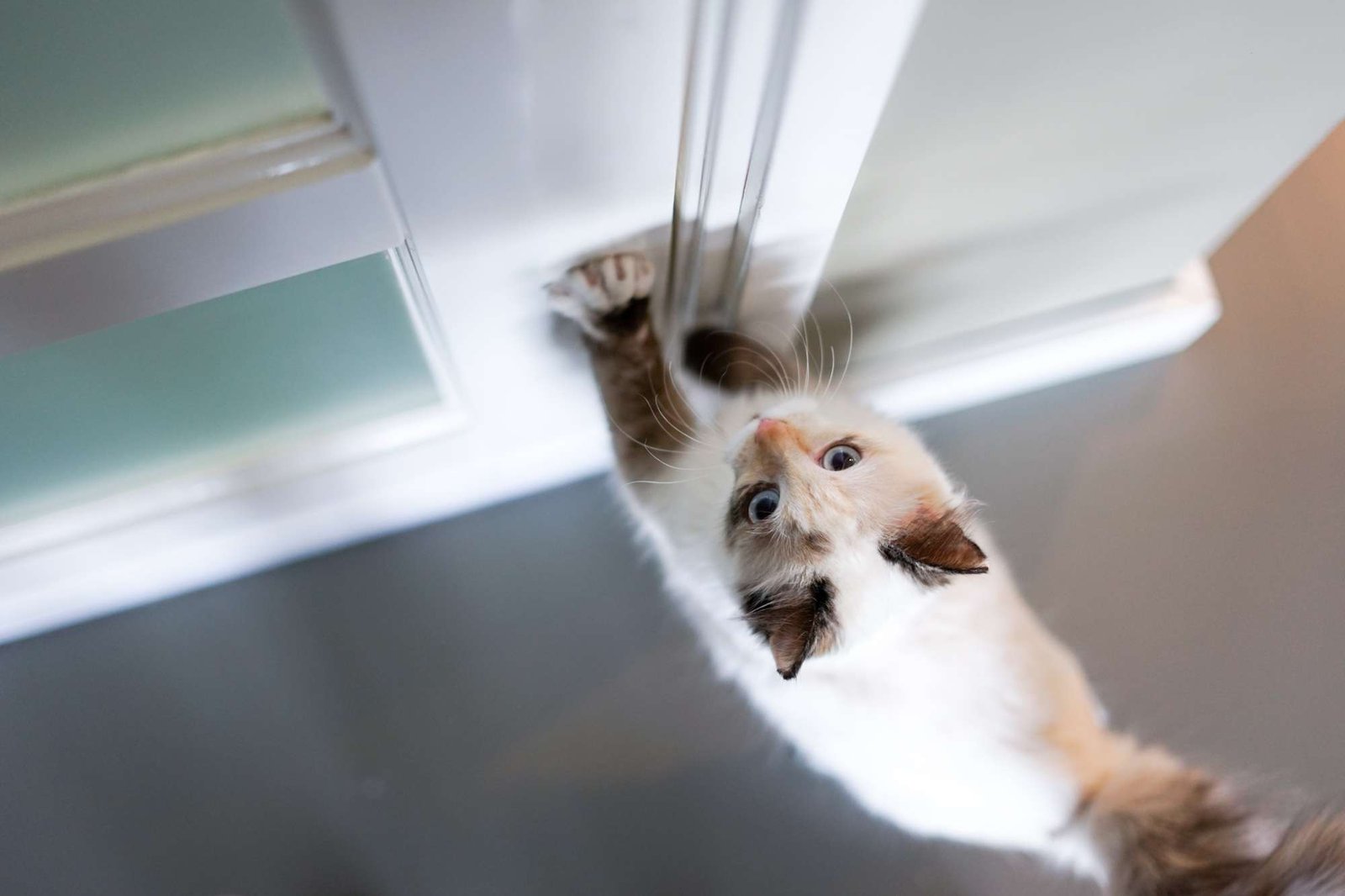

What is it about cats and closed doors? There’s something both hilarious and frustrating about watching a cat’s dramatic response to a closed door. One moment, everything is peaceful. The next, you hear gentle pawing, persistent meowing, and what sounds suspiciously like a feline conspiracy to breach the impenetrable barrier. As a long-time cat owner, I’ve witnessed this scene more times than I can count, and I’ve always wondered: what’s really going on in that furry little head?
- 1. The Science Behind Cats and Closed Doors: Territory and Control
- 2. Cat Social Behavior: More Than Just Independence
- 3. Understanding Your Cat’s Door Fixation: The Curiosity Factor
- 4. How to Stop Cats from Scratching Doors: Effective Solutions
- 5. Multi-Pet Household Door Solutions: Practical Tips
- 6. When Door Obsession Signals Other Issues: What to Watch For
- 7. Cat Psychology: Understanding Door-Related Behaviors
- 8. Living with Door-Obsessed Cats: Creating Harmony
1. The Science Behind Cats and Closed Doors: Territory and Control
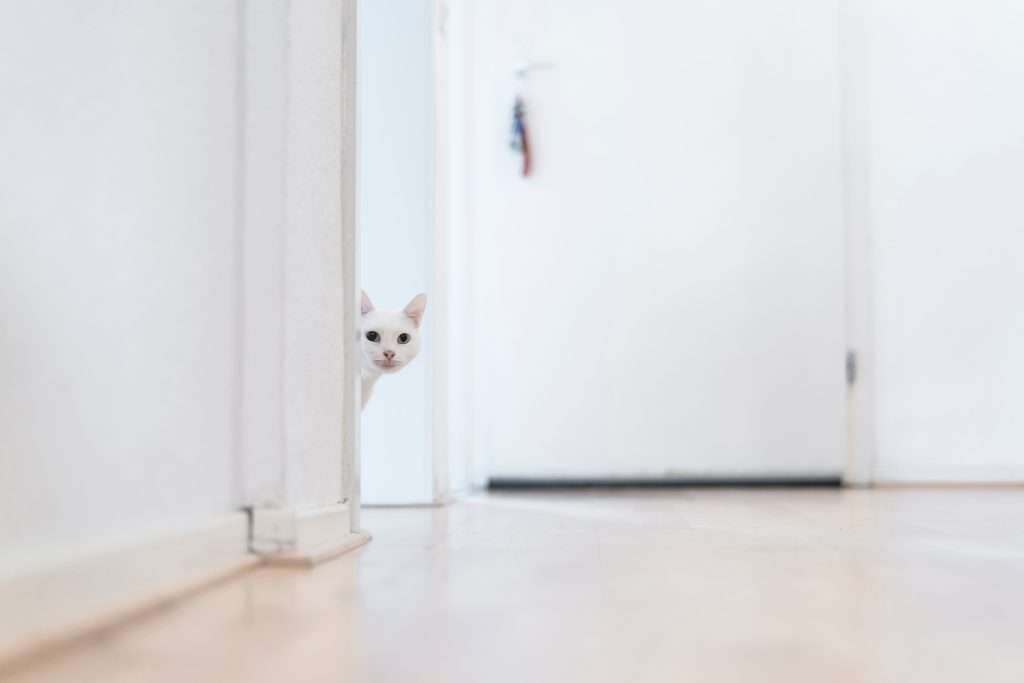
After diving deep into the world of cat behavior, I discovered that this cats and closed doors drama isn’t just random feline whimsy. It’s a complex interplay of territorial instincts, social needs, and an almost adorable level of curiosity that would make even the most seasoned detective jealous.
Let’s start with the fundamental issue: territory. Cats are consummate masters of their domain, and a closed door represents an unacceptable challenge to their supreme rulership. Tori Schlosser, a certified cat trainer and owner of Purrsuasion Cat Training, explains this beautifully. For cats, feeling secure means having unrestricted access to every nook and cranny of their perceived territory. A closed door isn’t just an obstacle; it’s a direct threat to their sense of control and safety.
2. Cat Social Behavior: More Than Just Independence
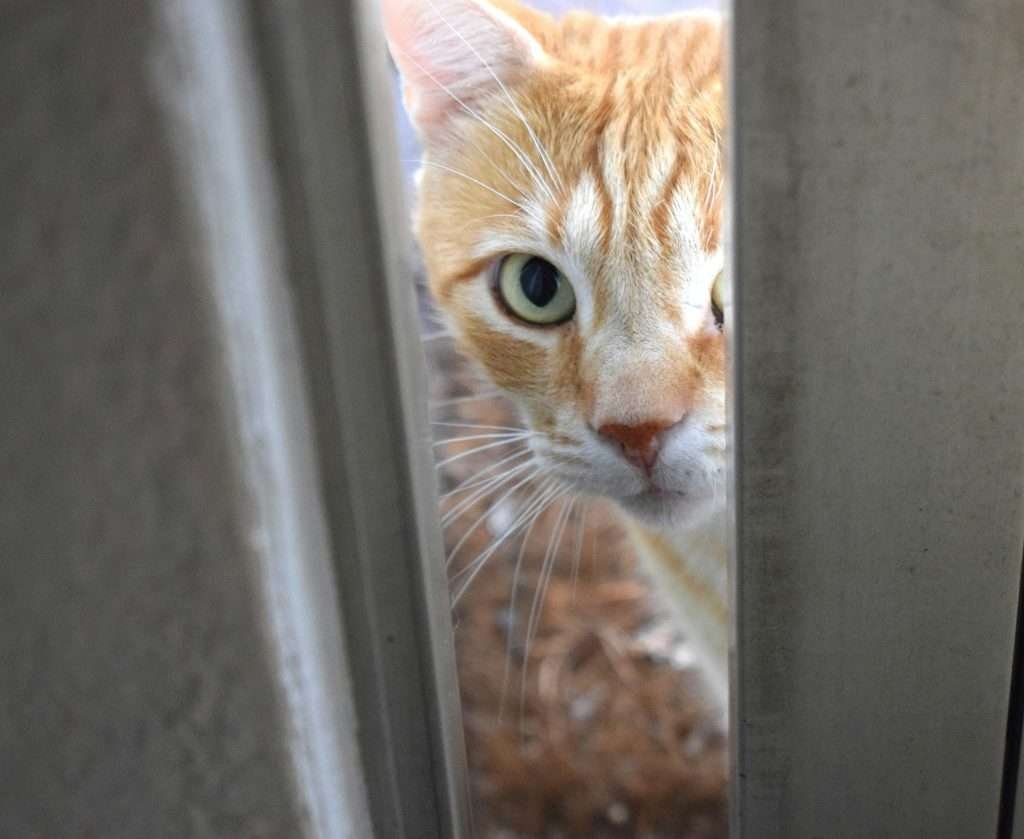
But it’s not just about territory. Cats are far more social than we give them credit for. A fascinating 2017 study revealed something that might surprise many cat skeptics: these independent-looking creatures actually prefer human interaction over food, toys, or even fascinating scents. That closed door isn’t just a physical barrier; it’s a potential interruption of precious social time with their beloved human.
RELATED: Cat Personality Types: 7 Key Traits and Behaviors to Understand
3. Understanding Your Cat’s Door Fixation: The Curiosity Factor
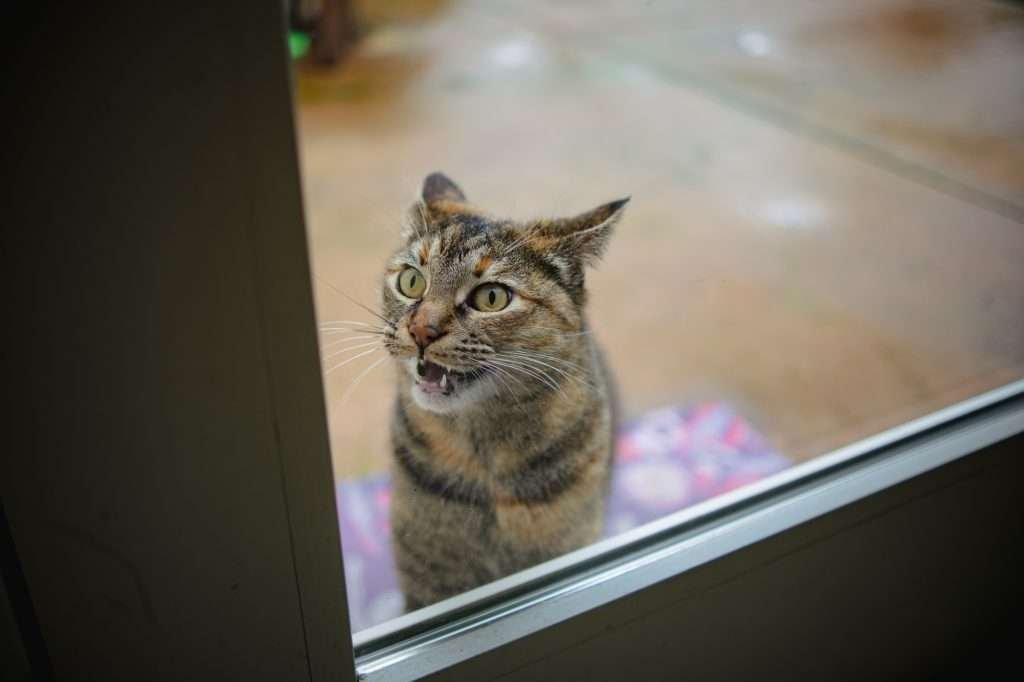
Imagine being a cat. Your entire world revolves around understanding and exploring your environment. Suddenly, a mysterious portal — I mean, a door — appears, blocking your view and access. What’s on the other side? Is it something exciting? Something dangerous? Something delicious? The not knowing becomes an irresistible challenge.
This curiosity isn’t uniform, though. With cats and closed doors, if a door has always been closed and nothing interesting seems to happen behind it, most cats will lose interest. But a door that’s sometimes open, or one behind which their human is hiding? That’s pure temptation. I experience this all too often when I’m inside my walk-in-closet. I prefer to keep this off limits to the cats since my clean clothes are in there and I don’t want cat hair on them.
4. How to Stop Cats from Scratching Doors: Effective Solutions
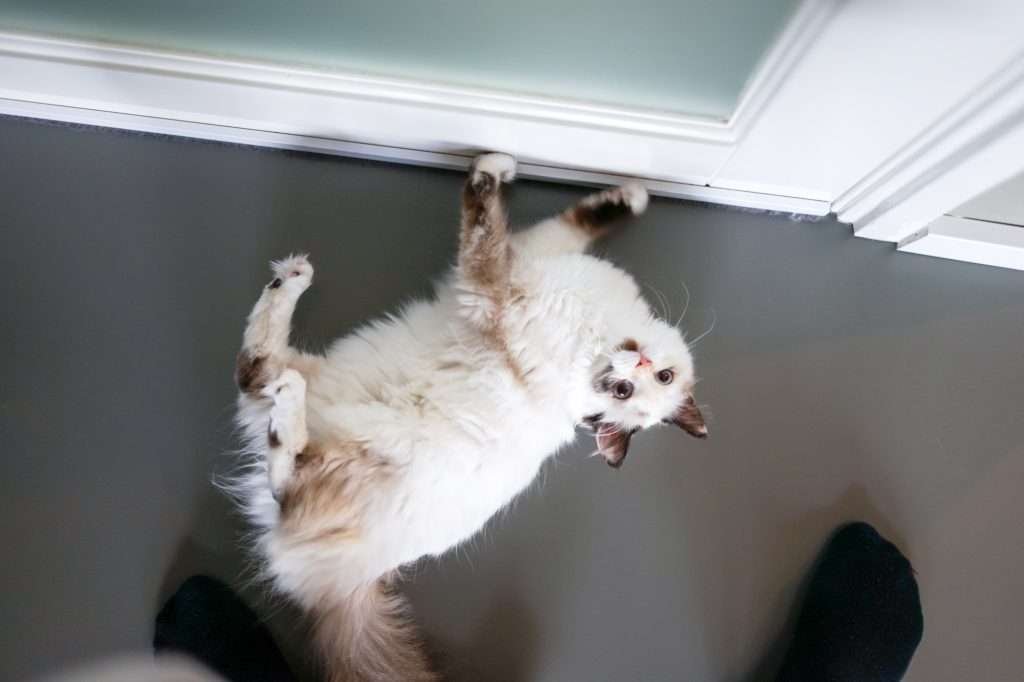
So how do we manage this door dilemma? Schlosser offers some ingenious strategies. First and foremost, distraction is key. Puzzle feeders, automated toys, and carefully placed sun-bathing spots can work wonders. If you know you’ll need to close a door, spend time making that space fun beforehand. Play with your cat in the room, create positive associations, and they’ll be less likely to stage a full-scale door rebellion.
For those dealing with nighttime door scratching — a true test of any cat owner’s patience — the solution lies in energy management. A vigorous play session before bedtime can help exhaust your feline friend, making them more likely to settle down peacefully. And whatever you do, resist the temptation to reward door-scratching behavior. Responding, even negatively, teaches your cat that this is an effective way to get your attention.
5. Multi-Pet Household Door Solutions: Practical Tips
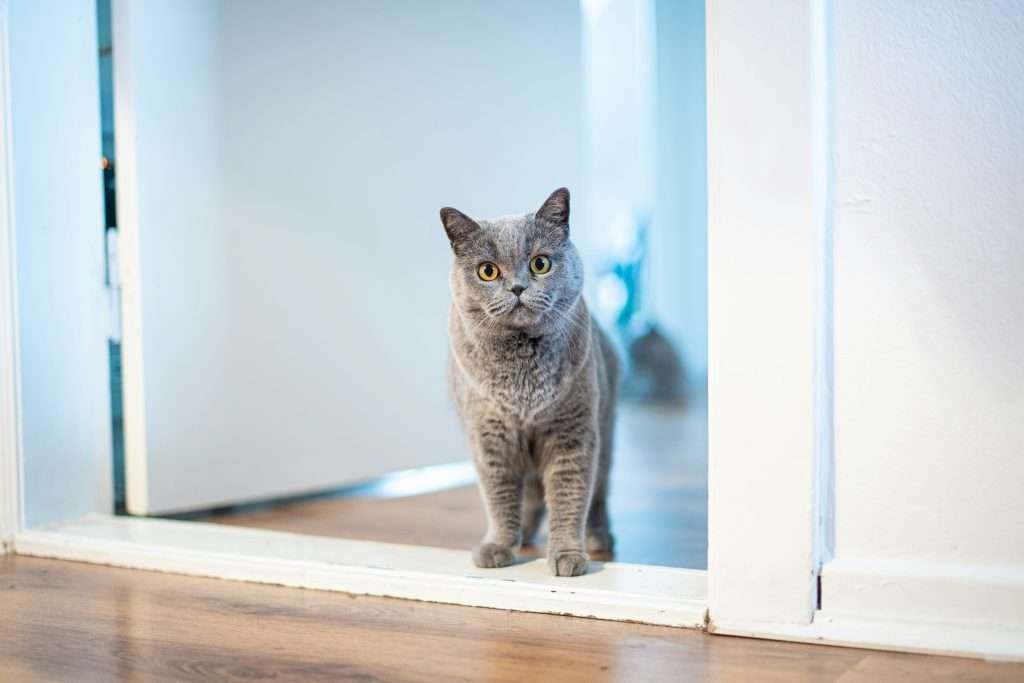
Some clever solutions exist for multi-pet households too. Pet latches and door straps can create openings just large enough for a cat to slip through while keeping other pets out. It’s like a VIP access pass for your feline friend.
6. When Door Obsession Signals Other Issues: What to Watch For
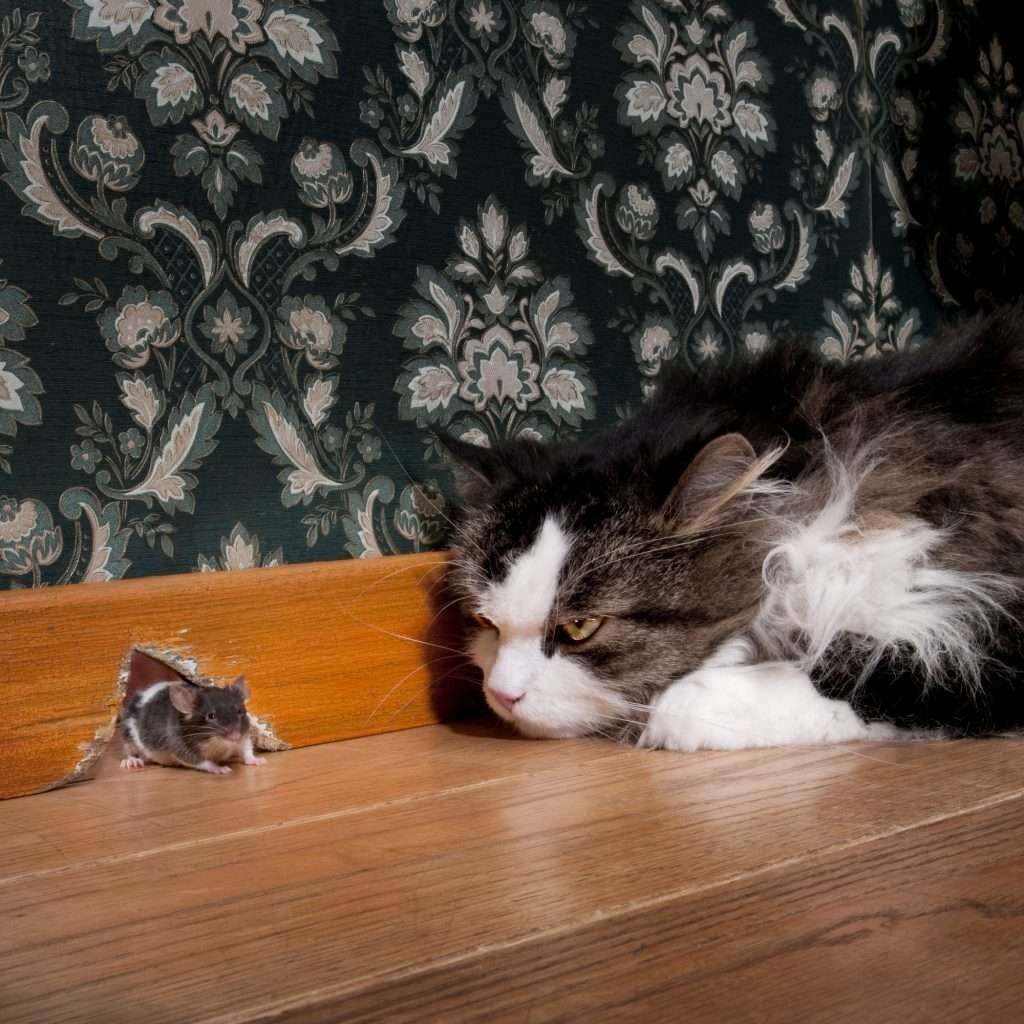
Interestingly, sudden changes in door-related behavior can be more than just stubborn cat syndrome. Schlosser warns that if your cat suddenly becomes fixated on a previously ignored door, it might be worth investigating. Cats have remarkable instincts and might be sensing something you can’t — be it a small creature that’s found its way indoors or some other environmental change.
7. Cat Psychology: Understanding Door-Related Behaviors

What fascinates me most about cats and closed doors in this entire door drama is what it reveals about cat psychology. These aren’t just cute, aloof creatures lounging around. They’re intelligent, complex beings with strong needs for security, interaction, and understanding of their environment. A closed door isn’t just an inconvenience; it’s a challenge to their entire worldview.
8. Living with Door-Obsessed Cats: Creating Harmony
For cat owners, the lesson is clear: patience, understanding, and a bit of strategic distraction can transform the closed-door standoff into a peaceful coexistence. Embrace your cat’s curiosity, provide mental stimulation, and remember that every dramatic meow is essentially a request for connection.
So the next time your cat stages a protest at a closed door, take a moment to appreciate the intricate world of feline emotions. They’re not just being difficult —they’re communicating, exploring, and fundamentally being the wonderfully weird creatures we’ve come to love.
In the grand theater of pet-human relationships, the closed door is just another act — and trust me, your cat is definitely the star of the show.
Join the Conversation!
I’ve shared my insights about cats and their curious relationship with cats and closed doors, but I know every cat owner has their own unique tale. Now, I’d love to hear from you!
Have you experienced epic door drama with your feline friend? What creative solutions have you discovered to manage your cat’s closed-door curiosity? Do you have a cat who’s particularly persistent — or perhaps one who’s surprisingly indifferent to barriers?
Let’s dive deeper into the world of cats and closed doors together. Share your stories in the comments below and answer these conversation starters:
- What’s the most dramatic thing your cat has done to try and get through a closed door?
- Have you noticed different behaviors in cats you’ve owned when it comes to closed spaces?
- Do you think your cat’s door behavior is more about territorial instinct, social connection, or pure curiosity?
- Have any of you successfully trained your cat to be more relaxed around closed doors? What techniques worked for you?
- For multi-pet households: How do you manage door access between different animals?
Your experiences and insights can help other cat owners understand their own furry companions better. Let’s create a community of understanding, one meow at a time!
Don’t be shy — drop a comment and let’s get chatting about our feline friends and their door dilemmas!
Comments are moderated to ensure a supportive, kind environment for all.
Stay connected with Caty Chat for regular updates, insights, and stories about the wonderful world of cats.



My cats don’t give me an ounce of privacy!! If I don’t close the door all the way while going to the bathroom or brushing my teeth they push the door open to come see what I’m doing. Haha
Mine too. As long as you live with cats, you have no privacy. They’re little nosy Rosie’s and want to be apart of everything with you.
Gotta love cats ❤️🐈🐈⬛