

More Than Just a Cute Face
Ever watched your cat and thought, “There’s definitely something going on behind those eyes?” I wonder how a cat brain vs human brain is different? Well, you’re absolutely right. Cats aren’t just adorable companions — they’re actually walking, purring balls of cognitive complexity that might just be smarter than we ever imagined.
- More Than Just a Cute Face
- 1. Matisse the Cabinet Master: Real-Life Cat Problem Solving
- 2. The Compact Supercomputer: Inside Your Cat’s Brain
- 3. 90% Human-Like: The Surprising Brain Similarities
- 4. Emotional Memory Masters: How Cats Remember for Years
- 5. Visual Recognition Superstars: Your Cat’s Internal Instagram
- 6. Male vs. Female: How Sex Affects Cat Intelligence
- 7. The Three-Year-Old Comparison: Understanding Cat Cognitive Abilities
- 8. Beyond Feeding: Why Cat Intelligence Transforms Companionship
- 9. Science-Backed Brilliance: The Research Behind Feline Smarts
1. Matisse the Cabinet Master: Real-Life Cat Problem Solving
Let me tell you a story that might sound familiar to any cat parent out there. I have this incredible cat named Matisse who, and I kid you not, has learned to open not just one cabinet, but practically every storage space in my home. Sound impossible? It’s not. This is the kind of intelligence that cats possess — a remarkable ability to learn, adapt, and problem-solve that goes far beyond what most people assume. Intelligence is fundamentally about learning from experiences, retaining knowledge, and using that knowledge to solve problems in new environments. It’s like having a Swiss Army knife of cognitive skills, and cats have that in spades.
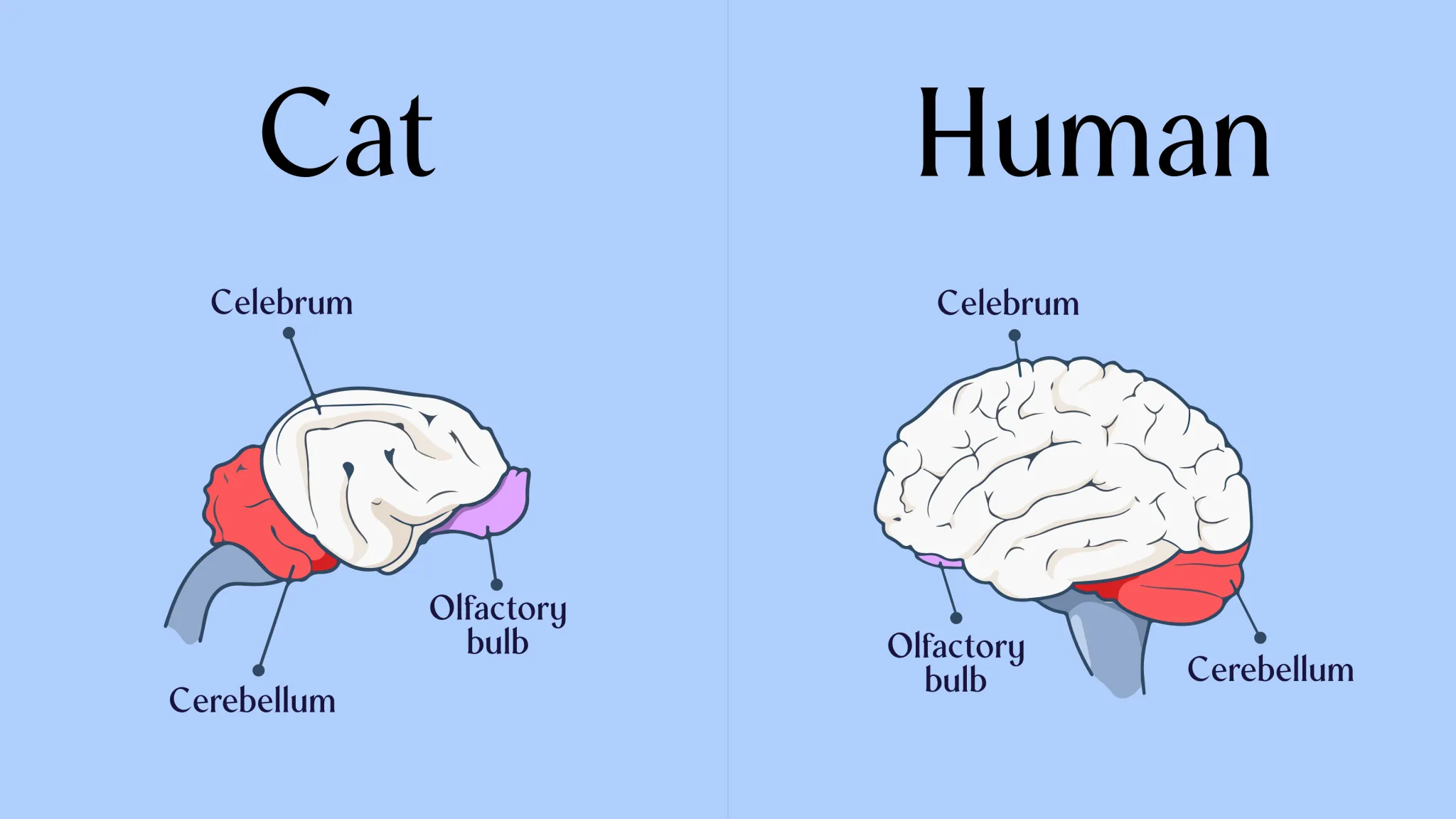
When we think about animal intelligence, dogs often steal the spotlight. But here’s a little secret: cats are the unsung geniuses of the animal kingdom. Cat brains might be small — about two inches and weighing just around an ounce — but what they lack in size, they more than make up for in neural complexity.
2. The Compact Supercomputer: Inside Your Cat’s Brain
Think of it like this: It’s not about how big your brain is, but how wonderfully it’s wired. Imagine a compact computer that’s incredibly efficient versus a massive machine that’s clunky and slow. Cats are the compact, high-performance models of the animal world. The cat brain is intricately folded and structured in ways that maximize cognitive potential.
RELATED: Senior Cat Behavior: 7 Essential Signs and Solutions for Aging Felines
3. 90% Human-Like: The Surprising Brain Similarities

Here’s something mind-blowing: a cat’s brain is structurally 90% similar to a human brain. That’s right. Those whiskers and that tail aren’t just cute accessories — they’re attached to a seriously sophisticated thinking machine. “While humans have 86 billions of neurons according to Herculano-Houzel, S. (2012), cats boast about 250 million neurons according to neuroscientist Suzana Herculano-Houzel (2017) and her team, which is nearly double the number found in dogs.” “Cats have much smaller brains (25 g) than dogs (74 g), but a much higher neuron packing density (NPD), and they therefore have almost twice as many cortical neurons (300 million) as dogs (160 million)(Dicke and Roth 2015).” This isn’t just trivia; this is a testament to their incredible cognitive capabilities.
But what does this mean for our relationship with cats? It transforms how we might view our feline companions. They’re not just pets; they’re intelligent partners who are constantly observing, learning, and interacting with their environment in incredibly nuanced ways.
4. Emotional Memory Masters: How Cats Remember for Years

Consider memory, for instance. Cats don’t just remember — they remember with emotional depth. That veterinary visit that was stressful? They’ll remember it. That amazing play session with their favorite feather toy? Also remembered. Studies have shown according to Thorndike, E.L. (1898) cats are capable of having memories up to 10 years or more. This emotional memory means they’re forming complex relationships with us, understanding our patterns, and adapting accordingly.
From an evolutionary and companionship perspective, this intelligence makes cats extraordinary partners. They’re not just independent creatures but intelligent beings who choose to share their lives with us. When a cat decides to curl up next to you or greet you at the door, it’s not just instinct — it’s a calculated, intelligent choice.
5. Visual Recognition Superstars: Your Cat’s Internal Instagram

Recent research has unveiled something pretty incredible about our furry companions: cats possess visual recognition memory that rivals some of the best in the animal kingdom. But what does this actually mean for your cat? Well, it’s pretty amazing — your feline friend isn’t just lounging around looking cute (though they excel at that too!). They’re actually processing and remembering visual information in surprisingly sophisticated ways.
Think about it this way: when your cat stares intently out the window at birds, or watches your every move in the kitchen, they’re not just being nosy — they’re actively encoding and storing visual information in their flexible little brains. This flexibility in cerebral encoding means they can adapt their mental processing to different situations and remember them for future reference. It’s like they have their own internal Instagram feed, storing snapshots of important moments and information!
This explains so many of those quirky cat behaviors we see daily. Have you ever wondered why your cat remembers exactly where you hid their treats, even if you haven’t opened that cabinet in weeks? Or how they somehow know which neighbor’s cats are right outside the front door lounging? Or how they recognize your neighbors as friendly people from seeing you talking to them? That’s their visual recognition memory at work! They’re not just remembering the information – they’re processing it, storing it, and using it to make decisions.
6. Male vs. Female: How Sex Affects Cat Intelligence
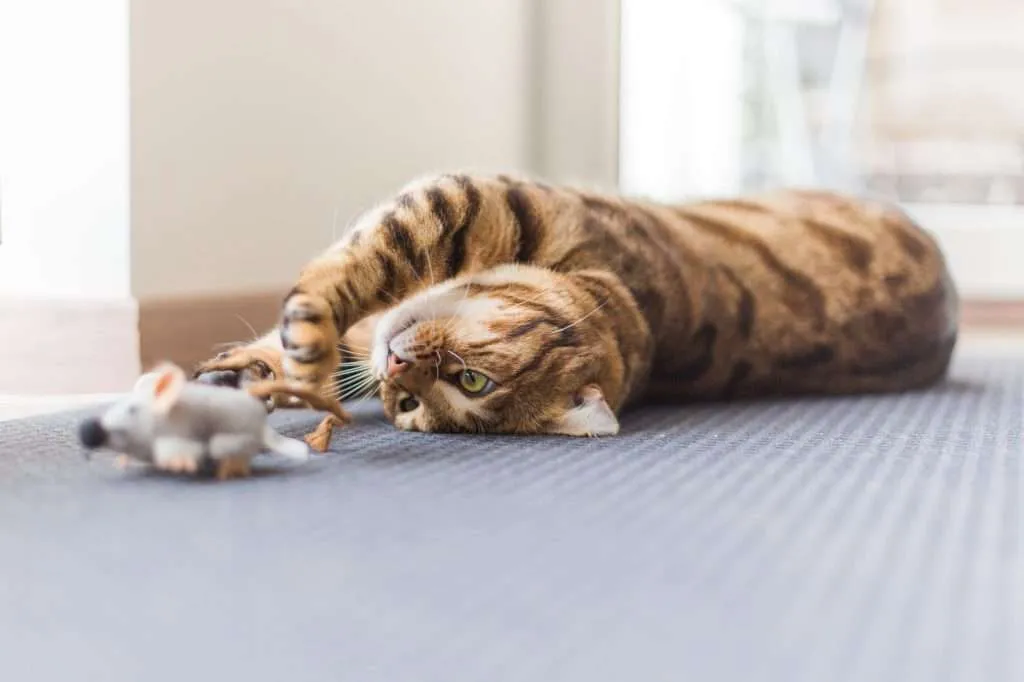
What’s particularly fascinating is how this ability manifests differently in male and female cats. While both sexes share this impressive cognitive capability, their different hormones and brain structures might influence how they use this information. Female cats might use their visual memory to keep track of their territory and potential nesting spots, while males might focus more on mapping larger territories and identifying other cats in the area.
This cognitive flexibility also explains why both male and female cats are such excellent hunters (even if your pampered indoor kitty only hunts toy mice). Their brains are wired to process and remember movement patterns, shapes, and spatial relationships — skills that were crucial for survival in the wild and now make them endlessly entertaining when chasing laser pointers around your living room.
7. The Three-Year-Old Comparison: Understanding Cat Cognitive Abilities

Researchers (Vitale Shreve, M., et al. 2017) have compared cat intelligence to that of a three-year-old human, which is fascinating. They can understand object permanence, meaning they know something exists even when it’s out of sight. Hide a treat in a drawer, and your cat will remember it’s there. This cognitive ability speaks volumes about their problem-solving skills and memory retention.
8. Beyond Feeding: Why Cat Intelligence Transforms Companionship
For those considering a feline companion, understanding their intelligence opens up a whole new world of interaction. These aren’t just animals you feed and ignore — they’re creatures capable of learning complex procedures, remembering experiences, and forming deep, meaningful bonds.
Let’s break down why cats are such incredible companions. Their intelligence means:
- More interactive and engaging pets
- Ability to learn tricks and complex behaviors
- Potential for deeper, more meaningful human-animal relationships
- Companions that can adapt to various home environments
- Creatures with emotional depth and cognitive complexity
9. Science-Backed Brilliance: The Research Behind Feline Smarts

The science behind feline intelligence isn’t just academic — it’s a window into understanding these remarkable creatures we share our homes with. Every time your cat figures out how to open a door, remembers where you keep their favorite toy, or gives you that knowing look, they’re showcasing a level of intelligence that deserves respect and admiration.
So the next time someone dismisses cats as aloof or unintelligent, you’ll have a scientific arsenal of information to prove otherwise. They’re not just cute — they’re cognitive powerhouses wrapped in fur, ready to surprise and delight us with their remarkable minds.
In the grand symphony of animal intelligence, cats aren’t just background musicians — they’re potential soloists, waiting to showcase their incredible mental prowess. And isn’t that what makes them such fascinating companions?
Stay connected with Caty Chat for regular updates, insights, and stories about the wonderful world of cats.