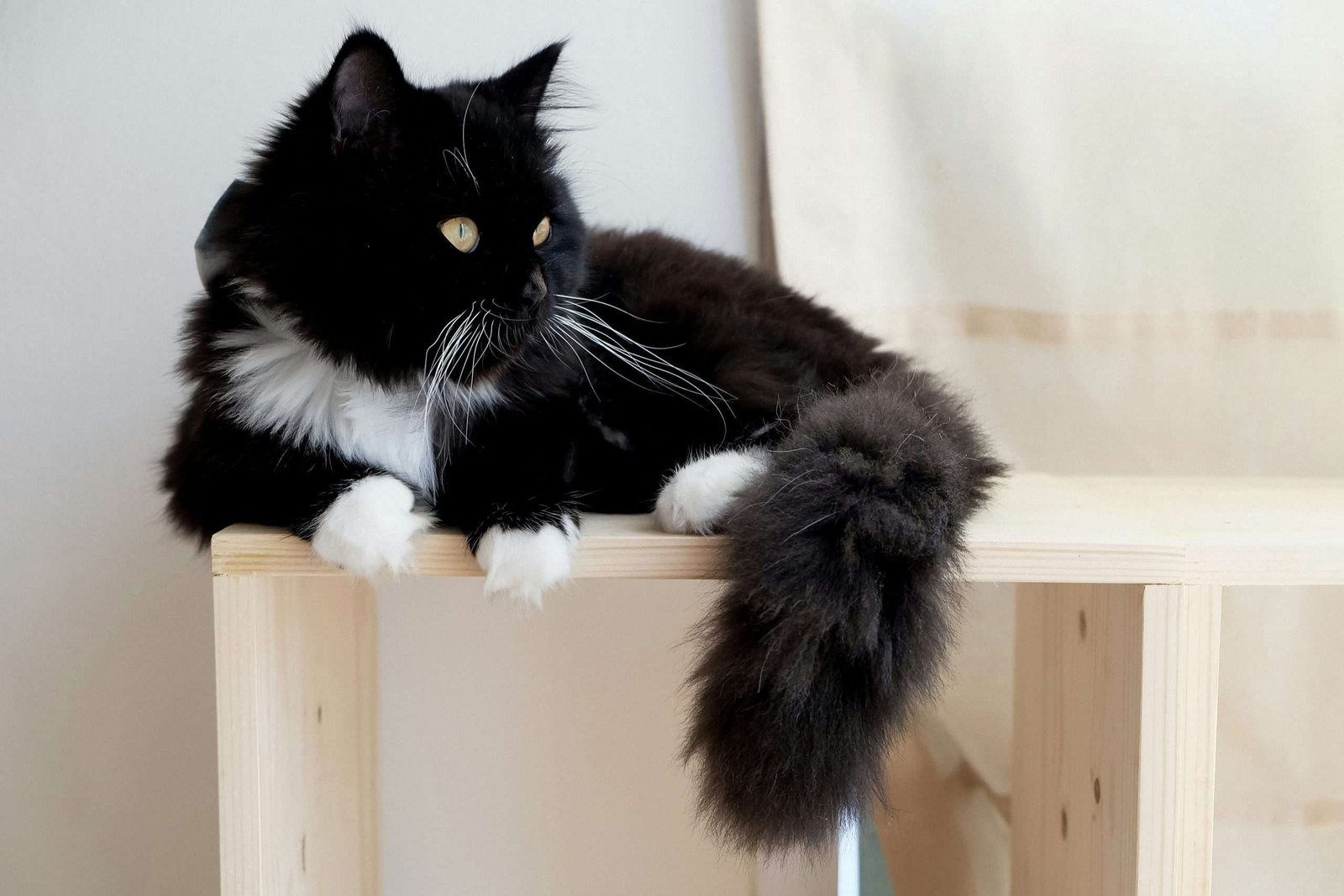



You know how some friendships just seem written in the stars? Well, I’ve been absolutely fascinated lately with one of history’s most enduring relationships — the bond between the Norse goddess Freyja (Freya in modern) and her beloved cats of Norse. I can’t believe I never appreciated this mythological connection before, but once I started reading about it, I couldn’t stop! There’s something so captivating about picturing this powerful, radiant goddess with her feline companions padding along beside her.
- The Goddess Freyja
- The Sacred Felines of Norse Culture
- The Skogkatt and Norwegian Forest Cat
- Freyja’s Famous Cat-Drawn Chariot
- Cats as Familiars and Protectors
- Tales of Mischief and Magic
- Cats in Norse Folklore and Superstitions
- The Enduring Legacy of Freyja’s Feline Connection
- Finding Your Own Connection to Freyja’s Cats
So grab a cup of something warm, get comfortable, and let me take you on a journey through the enchanting world of Norse mythology, where cats weren’t just pets but magical beings with powers beyond our imagination. Trust me, by the end of this, you’ll be looking at your own cat (if you have one) with newfound wonder!
The Goddess Freyja

Let’s start with Freyja herself — and oh my goodness, what a character she was! You might have heard her name before, maybe from that Marvel movie or a fantasy novel, but the real mythological Freyja was so much more complex than most modern interpretations give her credit for.
Freyja wasn’t just the goddess of love and beauty (though she absolutely rocked those domains). She was this incredible, multi-dimensional divine being who embodied love, fertility, war, and magic all at once. Can you imagine having that kind of range? She was basically the ultimate Renaissance woman of the Norse pantheon!
Imagine this: a radiant figure draped in the finest silks, adorned with gold jewelry, her presence lighting up any room she entered. Gods and mortals alike couldn’t resist her charm. But don’t mistake her beauty for weakness — Freyja was a force to be reckoned with — a real badass boss! She had this incredible duality about her, being both nurturing and fierce, loving and relentless.
And here’s where it gets interesting — amid all her divine qualities and responsibilities, Freyja had a special affinity for cats. Not just any cats, mind you, but specific breeds that played significant roles in her mythology. I honestly can’t help but to relate. Don’t we all feel a little more powerful with our feline friends nearby?
RELATED: Being Allergic to Your Cat Isn’t The End: 5 Blissful Ways to Live with Your Fur Baby
The Sacred Felines of Norse Culture
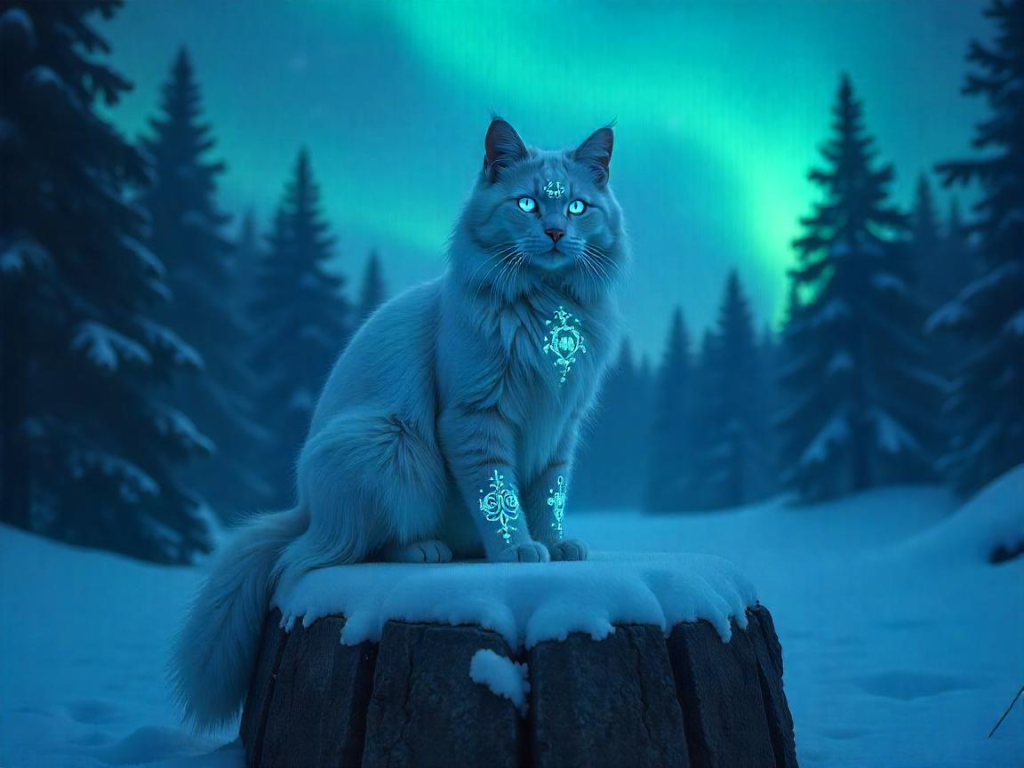
Now, before we dive deeper into Freyja’s specific cat companions, let’s take a moment to appreciate just how significant cats were in Norse culture as a whole. This wasn’t just a casual “cats are cute” situation — these creatures held serious supernatural and cultural importance.
In ancient Norse society, cats were seen as these magical, mystical beings with connections to the supernatural world. They were believed to possess extraordinary abilities — foresight, enhanced senses, and even the power to see spirits of the deceased. Just imagine living in a time when having a cat in your home meant having a guardian who could literally see ghosts! No wonder they were so cherished.
What I find particularly fascinating is how cats were considered symbols of female strength and independence. If you’ve ever lived with a cat, you totally get this, right? That perfect blend of affection on their own terms, graceful power, and a streak of wild unpredictability — all qualities that resonated deeply with the Norse people’s understanding of feminine energy.
The connection went so deep that cats were even included in burial rituals. Yes, you read that correctly! The Norse would sometimes bury their dead with cats, believing these magical creatures would guide souls safely to the afterlife. It’s a bit like having your own supernatural GPS to the great beyond. How incredible is that?
The Skogkatt and Norwegian Forest Cat
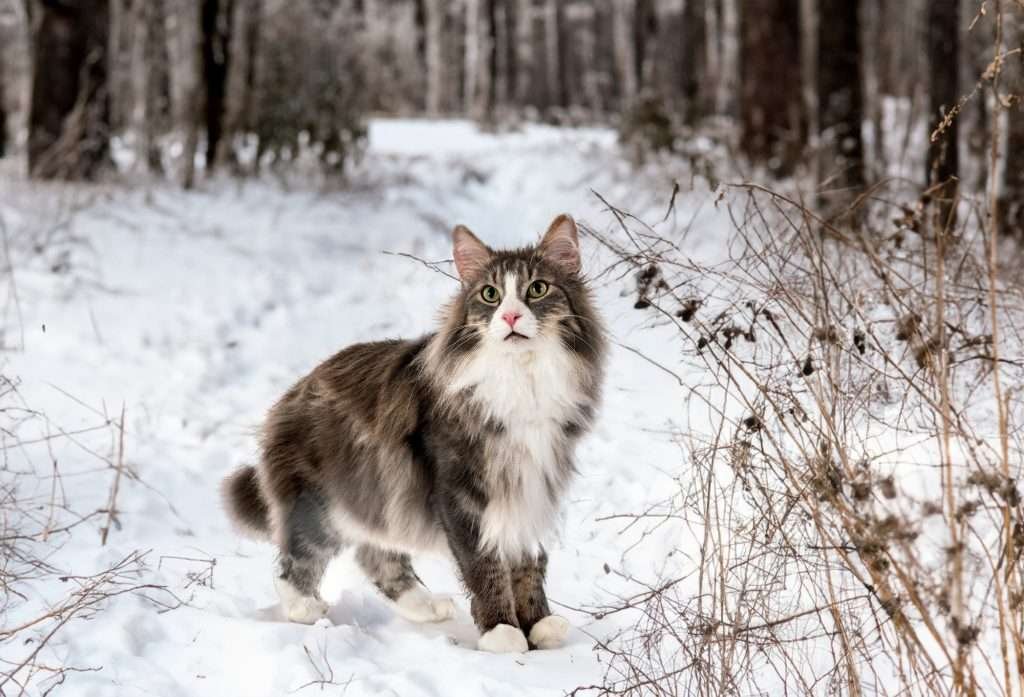
Okay, so now let’s talk about Freyja’s actual cats, because they weren’t just any ordinary mousers — they were magnificent creatures worthy of a goddess! The two breeds most commonly associated with Freyja were the Skogkatt, which is basically Norwegian Forest Cat in Norse.
Have you ever seen a Norwegian Forest Cat in person? They’re absolutely breathtaking — massive, fluffy creatures with thick coats perfect for surviving those harsh Nordic winters. I saw one at a cat show once and was completely awestruck by its size and majesty. These aren’t your average house cats; they’re like the noble lions of the domestic cat world!
The Skogkatt (which literally translates to “forest cat”) shares many similarities with the Norwegian Forest Cat and is often considered to be the same breed. These cats are characterized by their impressive thick fur, tufted ears, and sturdy builds. They’re natural hunters with incredible climbing abilities — a skill that would have made them invaluable companions in the dense forests of Scandinavia.
What I love about this connection is imagining how these cats’ physical traits inspired their mythological significance. Their waterproof coats and hardy nature made them perfect survivors in challenging environments — qualities that would certainly appeal to a powerful goddess like Freyja. There’s something so poetic about a goddess of both beauty and war choosing companions that embodied similar dualities: gorgeous to look at and yet impressively equipped for survival.
According to Norse folklore, these cats weren’t just beautiful; they possessed magical abilities. They could communicate with humans, detect danger before it arrived, and some tales even suggested they could heal illnesses! I don’t know about you, but my cat can barely communicate that his food bowl is half-empty without dramatic wailing.
Freyja’s Famous Cat-Drawn Chariot
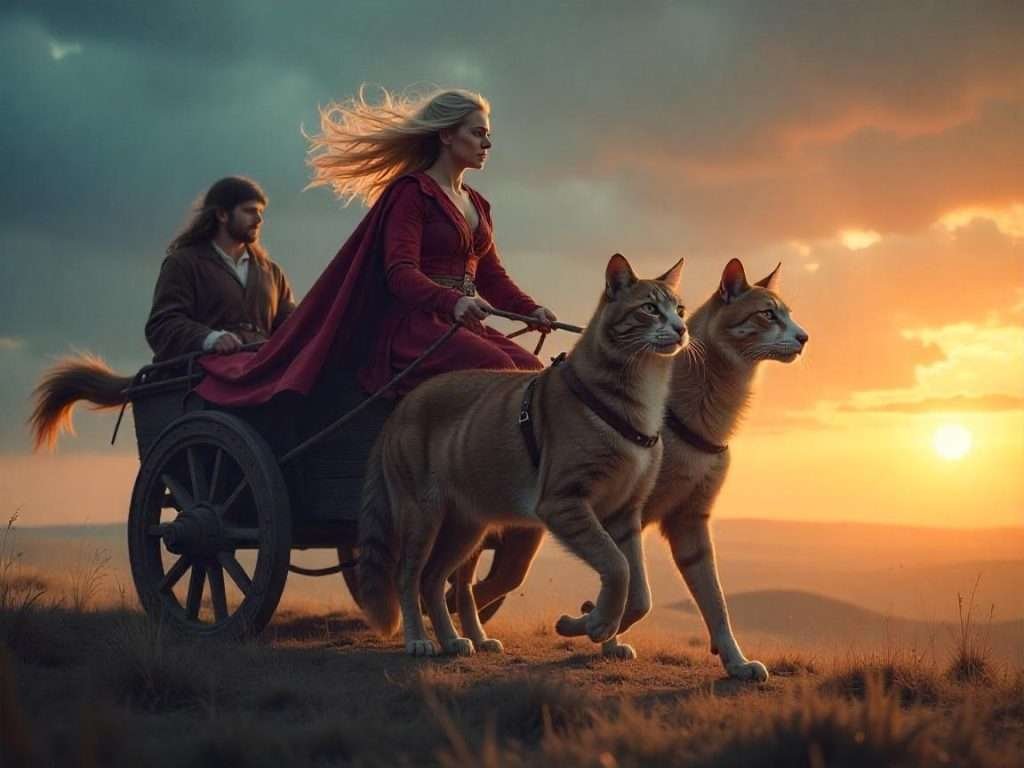
Now here’s where the story gets even more fantastic — Freyja’s mode of transportation! While Thor had his goat-drawn chariot and Odin had his eight-legged horse Sleipnir, Freyja traveled in style with a chariot pulled by two enormous cats.
Just imagine that for a moment. A radiant goddess soaring through the Norse skies in a chariot drawn not by horses or birds, but by two massive, powerful felines. It’s such a striking image, isn’t it? I can’t help but wonder what this says about how the Norse viewed the relationship between cats and humans — especially powerful female figures.
One of my favorite tales about this chariot comes from the story of Freyja searching for her lost husband, Od. In her desperation and grief, she traveled across the nine worlds in her cat-drawn chariot, shedding tears of gold as she went. There’s something so moving and beautiful about picturing this goddess in her moment of vulnerability, accompanied by her faithful feline companions pulling her chariot across the cosmos.
This image of the cat-drawn chariot has become one of the most iconic symbols associated with Freyja in Norse mythology. It perfectly encapsulates her unique connection to these animals and hints at the magical properties they were believed to possess. After all, not just any creature could pull a divine chariot through the realms!
Cats as Familiars and Protectors
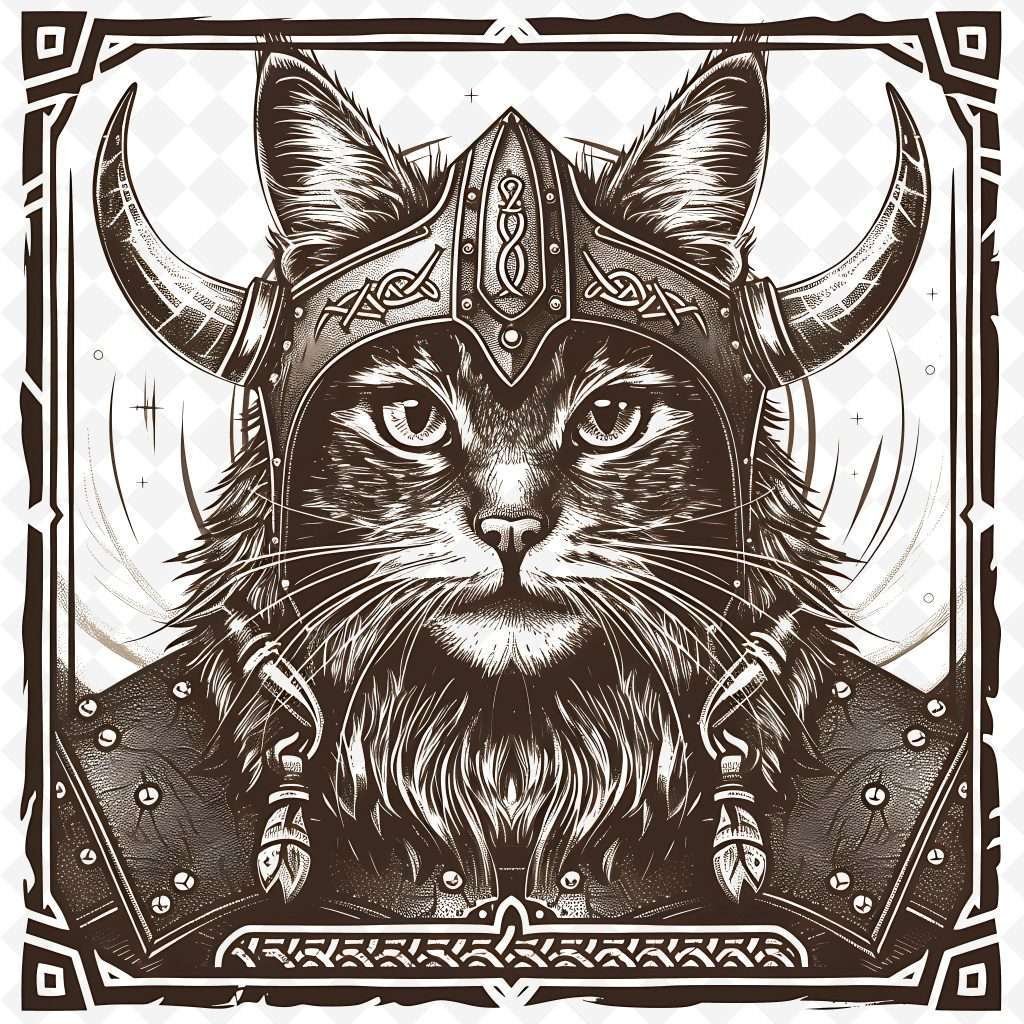
Beyond their role as chariot-pullers, Freyja’s cats served as her familiars and protectors. In Norse mythology, the concept of a familiar — a supernatural entity that assists and supports magic practitioners — was well established, and cats were considered particularly powerful familiars.
Freyja was associated not just with love and beauty but also with seidr (a form of Norse magic), her cats were believed to help her in her magical practices. They were thought to enhance her powers and serve as her eyes and ears in places she couldn’t physically be. Honestly, isn’t this just an elevated version of how our own cats seem to mysteriously know everything that happens in our homes?
There’s this wonderful tale about Freyja’s necklace Brisingamen being stolen by the trickster god Loki. Thor had to disguise himself as Freyja to retrieve it (talk about an unexpected crossdressing subplot in mythology!). During the wedding feast where this ruse took place, Thor’s disguise was nearly blown when he ate an entire ox and drank barrels of mead — not very goddess-like behavior! But according to legend, Freyja’s cats were there watching over the situation, and they created a distraction with their loud mewing that allowed Thor to complete his mission successfully.
I absolutely love this aspect of the mythology because it shows how these cats weren’t just passive companions but active participants in Freyja’s adventures. They had concern, intelligence, and protective instincts that made them invaluable allies to the goddess.
Tales of Mischief and Magic
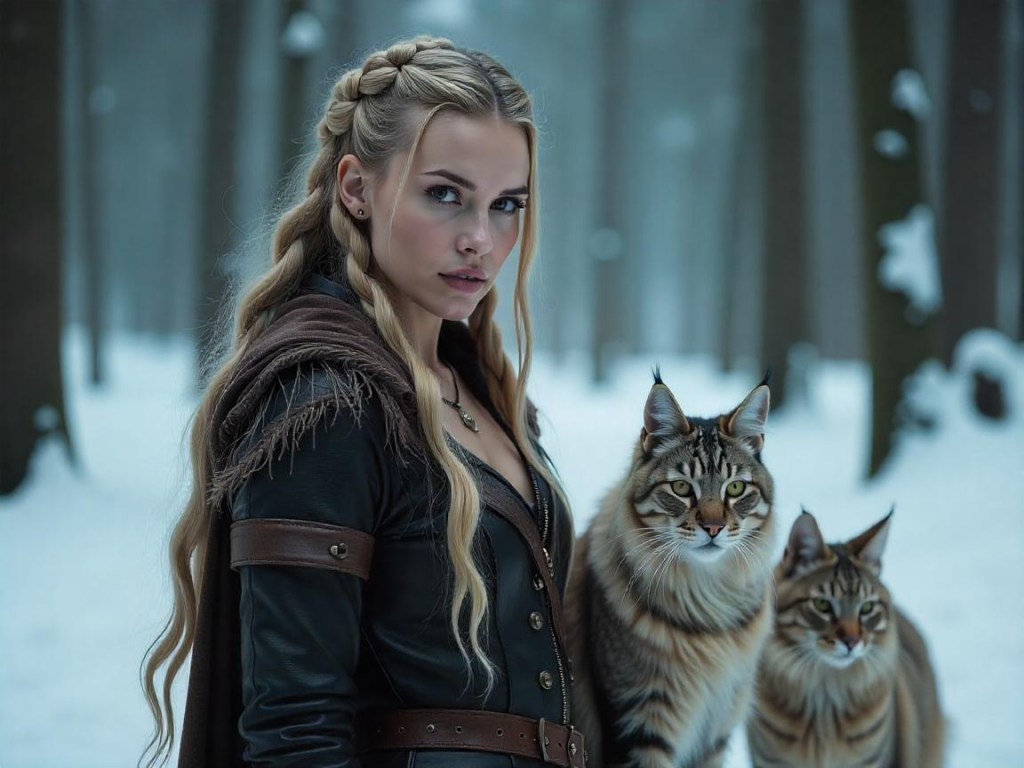
The stories involving Freyja and her cats aren’t all about divine chariot rides and magical protection. A lot of the tales highlight the playful, sometimes mischievous nature of these feline companions — a quality any cat owner can surely relate to!
One lovely story tells of how Freyja’s cats decided to play a trick on her by hiding her precious necklace. The goddess searched everywhere, becoming increasingly frustrated, until she finally enlisted the help of the very creatures who had hidden it in the first place. With their keen senses, the cats “found” the necklace and returned it to their mistress, who was none the wiser about their prank.
Another tale recounts how one of Freyja’s cats outsmarted a group of trolls who were attempting to steal the goddess’s magical boar (yes, she had a magical boar too — the lady collected magical animals like some people collect shoes!). The quick-thinking cat led the trolls on a wild chase through the forest, eventually tricking them into falling into a deep ravine. When the cat returned to Freyja with the boar safe and sound, she rewarded her clever companion with a feast fit for a bewitching feline.
I can’t help but smile at these stories because they capture something so fundamentally true about cats — their perfect blend of loyalty and independence, affection and mischief. They’re not blindly obedient like some might expect of a charming companion; they have their own agendas and personalities. The Norse clearly understood this essential cat nature and wove it beautifully into their mythology.
Cats in Norse Folklore and Superstitions
Beyond their specific association with Freyja, cats featured prominently in broader Norse folklore and superstitions. And like cat superstitions in many cultures, these beliefs were pleasantly contradictory!
On one hand, cats were revered as magical protectors and bringers of good fortune. Having a cat in your home was believed to bring fertility and prosperity. Farmers especially valued cats for their practical rodent-hunting abilities but also for the magical protection they supposedly offered to grain stores and livestock.
On the other hand, there were definitely some more ominous beliefs about cats in Norse culture. Black cats, in particular, were sometimes associated with witchcraft and misfortune — a superstition that sadly persists in some places even today. Some Norse folk believed that witches could transform themselves into cats to perform their magical deeds under cover of darkness. Can you imagine the paranoia this must have caused? Your neighbor’s cat giving you the side-eye might be just a cat being a cat… or it might be your neighbor in disguise!
One particularly interesting superstition suggested that killing a cat would bring terrible misfortune upon the perpetrator. This belief likely served the practical purpose of protecting these valuable animals in communities where they played important roles in controlling pest populations. But it also speaks to the deep respect and touch of fear with which the Norse regarded these mysterious creatures.
What interests me most about these contradictory beliefs is how they mirror our own often complex relationships with cats. We adore them, we’re sometimes a little wary of them, and we can never quite shake the feeling that they know more than they’re letting on. Some things never change, even across centuries!
The Enduring Legacy of Freyja’s Feline Connection

The association between Freyja and her cats has endured for centuries, outlasting the widespread practice of Norse religion itself. Today, this divine feline connection continues to captivate our imagination and influence modern culture in surprising ways.
For cat lovers who also appreciate mythology, Freyja’s story offers a wonderful historical precedent for the special bond we share with our feline friends. There’s something deeply validating about knowing that thousands of years ago, people recognized the same magical qualities in cats that we see today.
The Norwegian Forest Cat, one of Freyja’s legendary companions, has enjoyed a resurrection in popularity partially due to its mythological associations. These magnificent cats are now beloved pets around the world, their wild appearance and gentle temperaments making them perfect companions for modern households. Whenever I see one of these majestic creatures, I can’t help but think of Freyja’s chariot racing across the Norse skies.
Artists continue to draw inspiration from the imagery of Freyja and her cats, creating stunning visual interpretations that grace everything from museum walls to tattoo parlors. In literature, too, this divine feline connection has inspired countless retellings and reimaginings of Norse myths for contemporary audiences.
Perhaps most importantly, the story of Freyja and her cats reminds us that the human-feline bond is ancient and profound. Long before cat videos dominated the internet or cat memes became a cultural phenomenon, these mysterious creatures had already secured their place in our hearts, homes, and spiritual lives.
Finding Your Own Connection to Freyja’s Cats
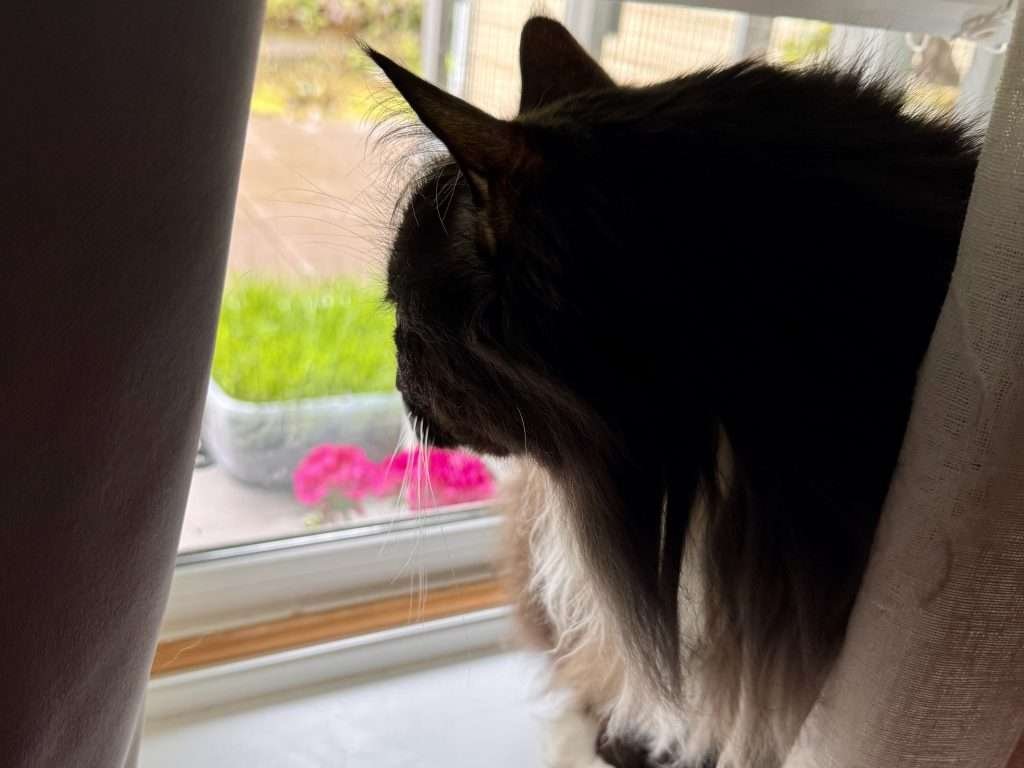
As I’ve journeyed deeper into this fascinating aspect of Norse mythology, I’ve found myself looking at my own cat with new eyes. When he sits in the window, staring intently at something I can’t see, I wonder if he’s perhaps glimpsing spirits like the cats of Norse legend. When he curls up beside me during a thunderstorm, I think of the protective qualities attributed to Freyja’s feline companions.
There’s something genuinely magical about sharing your life with a creature that has been cherished across cultures and throughout history. Whether or not you believe in the supernatural aspects of Norse mythology, there’s no denying that cats possess qualities that have captivated human imagination for millennia — their grace, their independence, their mysterious nature.
Perhaps we can all take a page from Freyja’s book and recognize the special magic that cats bring into our lives. They may not be pulling our chariots across the sky (though I suspect my cats would refuse such an undignified task anyway), but they offer companionship, comfort, and yes, a touch of the mystical in our everyday lives.
So next time your cat looks at you with that cryptic gaze — the one that makes you wonder what they’re really thinking — remember Freyja and her magical feline companions. Perhaps, in that moment, you’re experiencing a connection that reaches back through the centuries to when cats were not just pets but enchanting companions to gods and goddesses.
Join the Conversation!
What mysterious qualities do you see in your own cat that might have made them perfect companions for a Norse goddess? Or if you don’t have a cat, what aspects of these magnificent creatures do you find most intriguing? I’d love to hear your thoughts and stories about the magical cats in your life!