



Have you ever experienced that all-too-familiar moment? You know the one I’m talking about — it’s when you’re desperately trying to get your cat’s attention, calling your cat’s name across the room, making those classic “pspsps” sounds, maybe even shaking their treat bag, and yet… they stare back at you with that impossibly blank expression that seems to say, “I acknowledge your existence, human, but I’m choosing to ignore it.” Yeah, we’ve all been there.
I remember last month when my friend’s cat Mochi was sprawled across her kitchen counter (where he absolutely wasn’t supposed to be), and despite her increasingly desperate attempts to call him down, he maintained perfect eye contact while deliberately knocking a glass closer and closer to the edge. The power dynamics in that room were crystal clear, and let me tell you — Mochi was winning.
But here’s the thing: what if we’ve been approaching cat communication all wrong this entire time? What if there’s actually a science-backed method to getting our feline overlords to pay attention to us? Well, guess what? There is! And it’s absolutely fascinating.
According to new research, scientists from Paris-Nanterre University Laboratory of Compared Ethology and Cognition, have finally cracked the code on how to effectively communicate with cats, according to Gizmodo. And let me tell you, this study has completely changed how I think about interacting with our mysterious feline friends.
RELATED: Cat Zoomies: 5 Reasons Your Feline Suddenly Goes Wild
The Study That’s Changing Everything

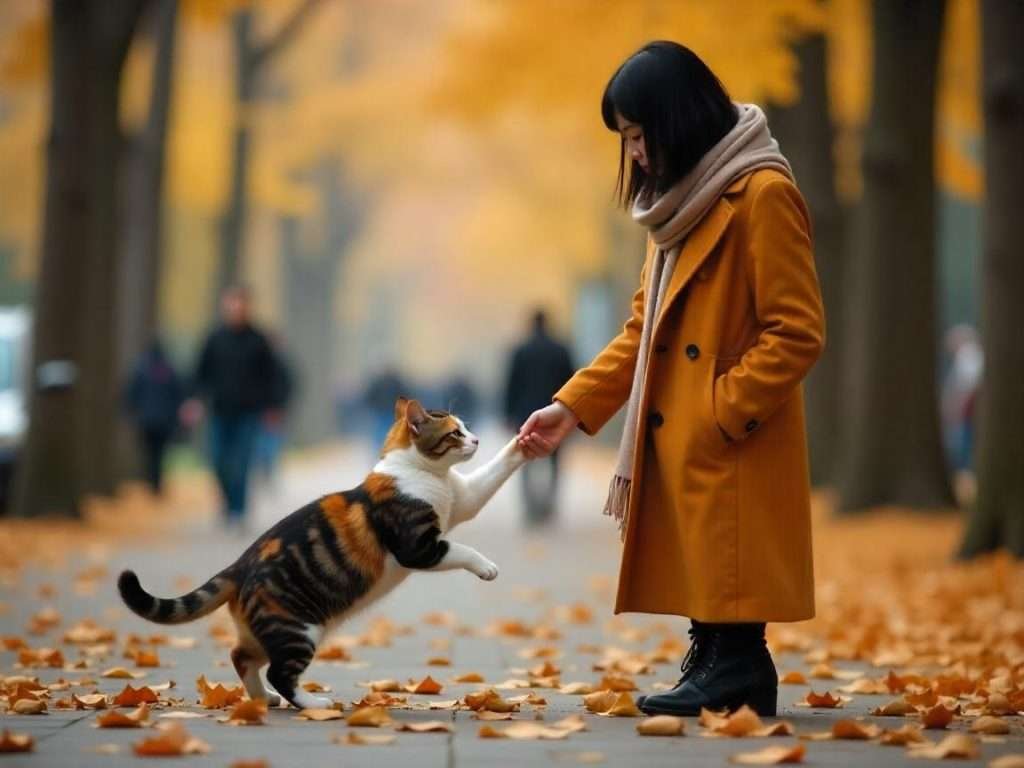
So let’s dive into this incredible research. The team, led by Charlotte de Mouzon (who, by the way, has dedicated her career to understanding human-cat interactions — dream job alert!), conducted their study in possibly the most perfect setting imaginable: a cat café. I mean, where else would you have access to multiple cats interacting with different humans in a controlled environment? Genius!
What they were specifically looking at was how to successfully capture a cat’s attention, particularly when the cat doesn’t know you well. This is huge because most of us cat people know that while our own cats might respond to us (when they feel like it), getting an unfamiliar cat to acknowledge you can feel nearly impossible.
Now, I’ve always been guilty of approaching strange cats with an enthusiastic “here kitty, kitty, kitty!” and then feeling personally rejected when they completely ignore me. Turns out, I’ve been doing it all wrong. The study found that cats actually respond much better to a combination of visual AND vocal signals — not just one or the other.
The Revelation That Changed Everything


Here’s where it gets really interesting. The research team tested several different approaches: using just visual signals (like hand gestures), using just vocal signals (like calling), combining both visual and vocal signals, and — this one made me feel sad a little while thinking about it — completely ignoring the cat as a control.
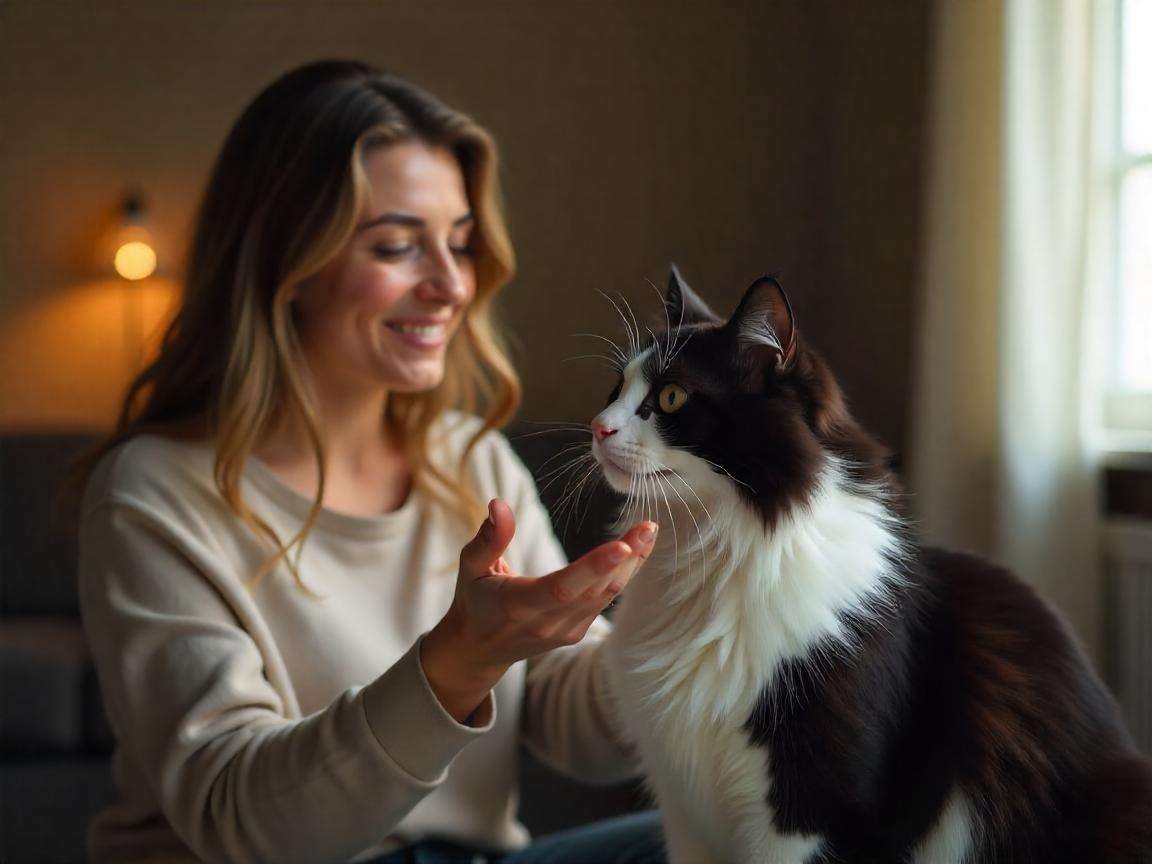
What they discovered completely upends our traditional understanding of cat communication. Cats responded most enthusiastically to a combination of visual and vocal signals. Just calling out to them? Mediocre results. Just using hand gestures? Better, but not optimal. Using both together? Now we’re talking cat language!
This makes so much sense when you think about it. Just yesterday, I called out to Matisse while staring at him, and I just got a stare back like we were staring each other down. But when I called out to him again and this time with my arms stretched out in front of me and opening and closing my hands at the same time…BINGO, he came right over to me. Full attention, complete with that adorable head-tilt that cats do when they’re actually processing what you’re saying.
Cultural Cat-Calling (Not the Bad Kind!)


One part of this study that absolutely delighted me was the exploration of cultural differences in how we call cats. Did you know that in France, people commonly use a “pff pff” sound to get a cat’s attention? I had no idea! In America, we tend to go with the classic “pspsps” or “here kitty kitty,” but apparently, different cultures have developed their own unique cat-calling sounds.
This makes me wonder about all the different ways people around the world communicate with cats. Is there an optimal sound that works across all cultures? Is the French “pff pff” actually more effective than our “pspsps”? These are the questions that keep me up at night, friends.
The Unexpected Finding: Never Ignore a Cat
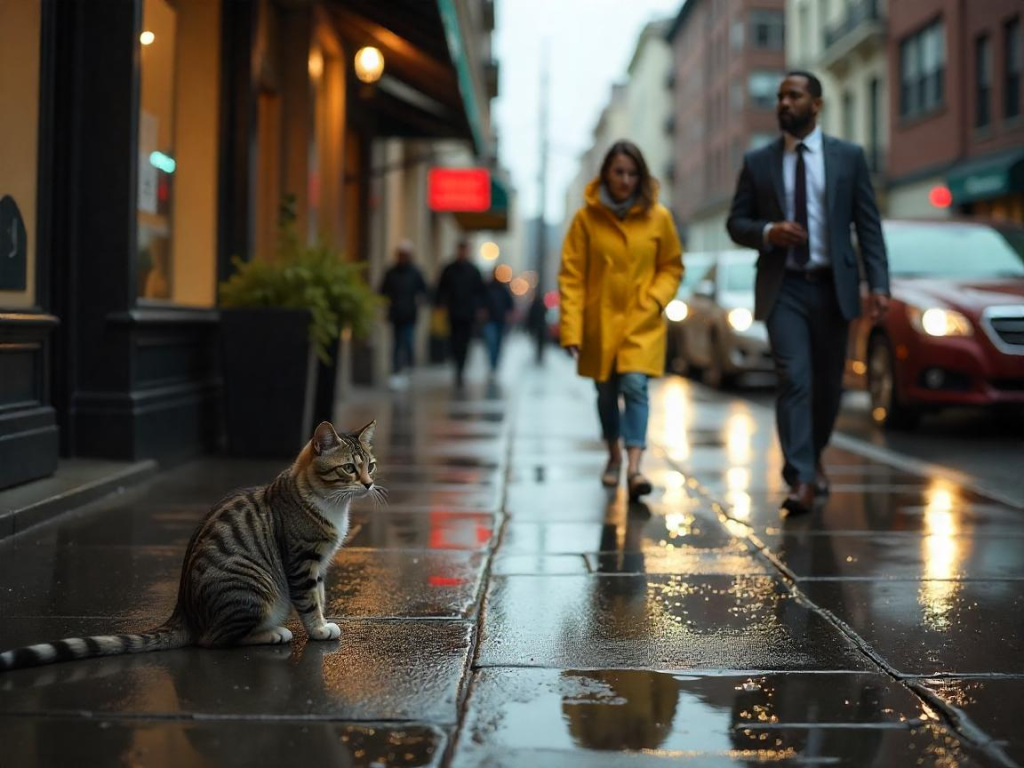
Here’s something that genuinely surprised me from the study: when cats were completely ignored by humans, they showed signs of stress — specifically, more frequent tail movements, which any cat owner knows is the universal sign for “I’m about to lose my patience with you, human.”
This finding actually made me feel a bit guilty. How many times have I walked past a neighborhood cat without acknowledging it? How many times have you? It turns out that when a human is present but not engaging with a cat at all, it creates confusion and stress for them. They don’t know what your intentions are, and that uncertainty is uncomfortable.
I think about this now whenever I see a cat. Even if I’m in a hurry, I’ll at least give a little “hi kitty kitty” or slow blink in their direction. It’s the feline equivalent of saying “I love you, I respect you, I’m not a threat.” Recently on a long walk, I spotted a orange tabby watching me from under a car. I took two seconds to slow-blink at him, and I swear he returned the gesture before I continued on my way.
Practical Applications for Cat People Everywhere
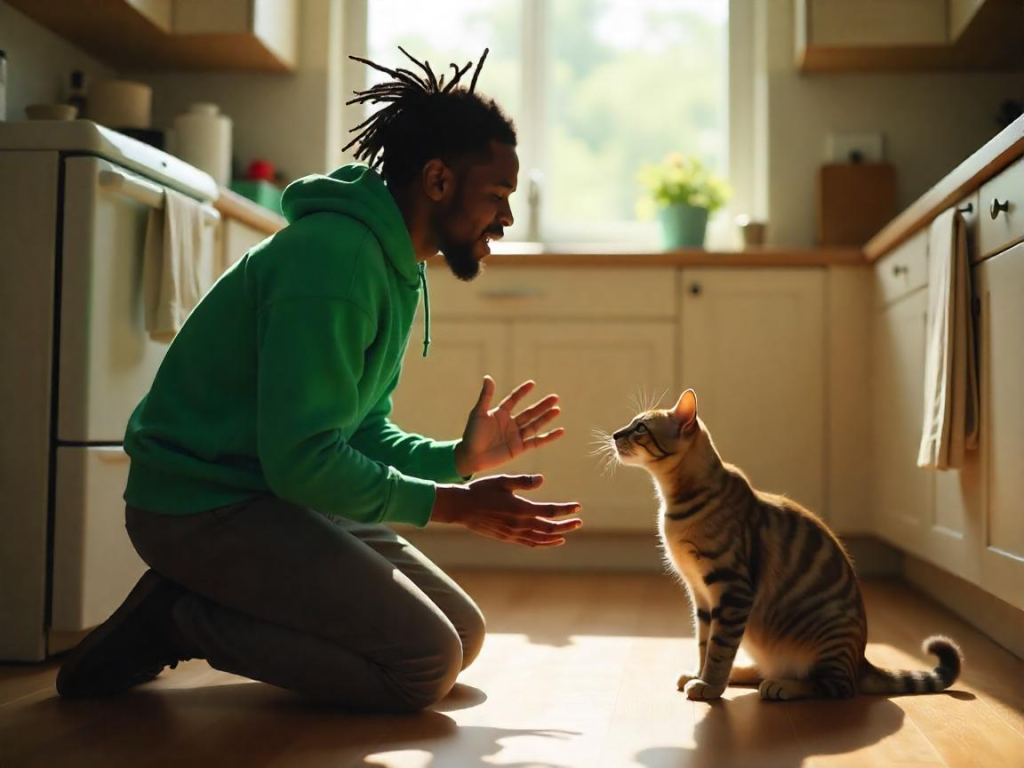
So what does all this mean for those of us who share our lives with cats or just want to be better at communicating with them? Let me break down some real-world applications of this research.
First and foremost, if you want to get a cat’s attention, combine both visual and vocal signals. Don’t just call their name — add a hand gesture. Don’t just wave — add a verbal cue. The combination is what really works.
Second, be mindful of how your presence (or lack of acknowledgment) might affect cats. Even if you’re not a “cat person,” acknowledging a cat’s presence with a simple glance can prevent causing them unnecessary stress.
Third, pay attention to how cats respond to you and adjust accordingly. Every cat is an individual with their own preferences and personality. My sister’s cat, Nina, for example, responds better to lower-pitched voices, while my friend’s kitten Pepper comes running at the slightest high-pitched squeak.
I’ve been testing these findings over the past year, and I have to say, the difference is noticeable. My success rate at getting cats to acknowledge me has increased dramatically. There’s something incredibly satisfying about making that connection with a creature that’s typically so selective about who they give their attention to.
Building Stronger Bonds with Our Feline Friends

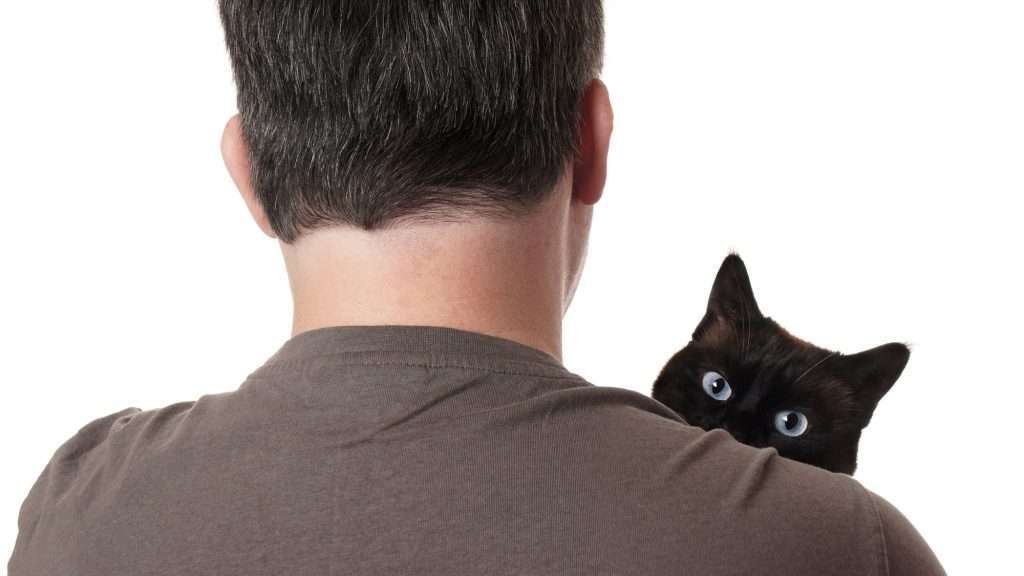
What I find most beautiful about this research is that it’s not just about getting cats to come when called — it’s about understanding them better and strengthening the bond between humans and cats. By learning to communicate in ways that make sense to them, we’re showing respect for their nature and their needs.
The human-cat relationship is one of the oldest and most complex relationships we have with domesticated animals. Unlike dogs, cats never fully domesticated in the traditional sense — they chose to live alongside us while maintaining much of their independence. Understanding their communication style is crucial to maintaining that special relationship.
I think about how my friend’s grandmother used to call her cats in from the garden every evening. She would stand at the back door, making a unique clicking sound with her tongue while tapping her hand against her leg. All five cats would come running from different corners of the yard. She intuitively knew what science is now confirming — cats respond to that combination of visual and vocal cues.
Where Do We Go From Here?


This study opens up so many possibilities for future research. How do cats communicate with each other, and can we learn from that? Are there other aspects of human-cat communication that we’ve been getting wrong? How do these findings apply to cats with hearing or vision impairments?
I’m particularly interested in how these insights might help animal shelters and rescue organizations. Cats in shelters often experience high stress levels, and better communication techniques could potentially improve their wellbeing and adoption rates. Imagine if potential adopters knew exactly how to approach cats in ways that made the cats feel comfortable and acknowledged. It could transform the adoption experience for both humans and felines.
In my own life, I’m going to be much more conscious of how I interact with the cats I encounter. No more mindlessly calling “kitty kitty” from across the room. Now I’ll combine that call with a gentle hand gesture, respecting their communication preferences.
Join the Conversation!
I’d love to know — have you noticed differences in how cats respond to various types of attention-getting methods? Have you developed your own special way of communicating with your feline friend that seems to work particularly well? The more we share our experiences, the more we can learn about these fascinating creatures who have chosen to share their lives with us.
After all, isn’t that what we all want at the end of the day? Not just pets who come when called, but companions who understand us and who we understand in return. That mutual understanding is the foundation of any great relationship — even one with a creature who sometimes acts like they couldn’t care less whether we exist or not.