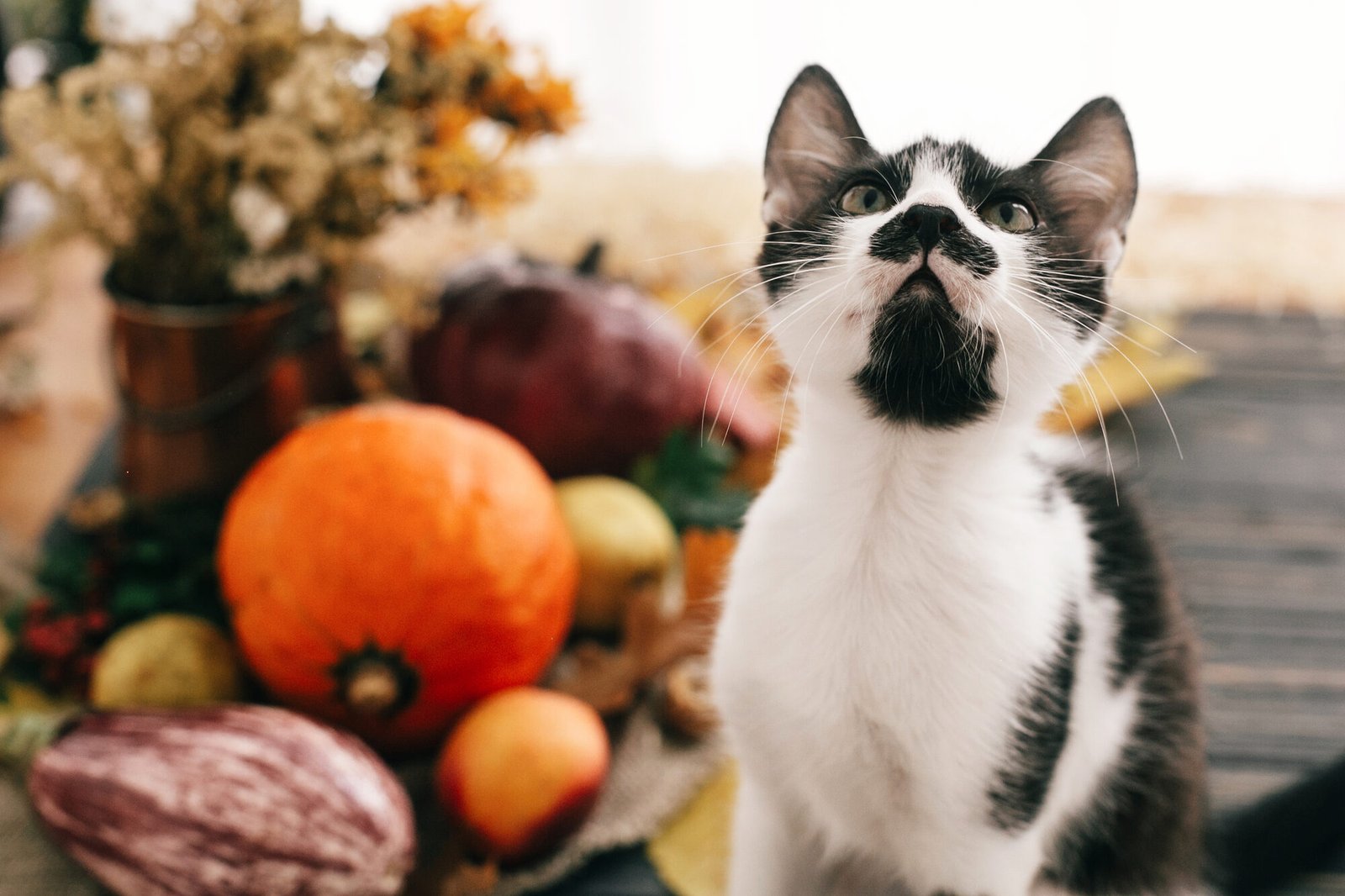

Few smells bring a cat to the kitchen faster than a roasting turkey. If your cat is weaving around your ankles while you carve, you have probably asked yourself: can cats eat turkey?
The good news: a little plain turkey is fine for most healthy cats. The trouble is almost everything else on a holiday plate: the skin, the bones, the gravy, the stuffing, and the onions and garlic hiding in half the side dishes. Here is what is safe, what is not, and how much is too much.
Quick answer: Yes, cats can eat plain, fully cooked turkey with no skin, bones or seasoning as an occasional treat. Skip the skin, bones, gravy and stuffing, keep anything made with onion or garlic away from your cat, and keep all treats under 10% of your cat’s daily calories.
Can Cats Eat Turkey?
Yes. Cats are carnivores, and turkey is a lean source of animal protein that shows up in plenty of commercial cat foods. The ASPCA’s Thanksgiving advice is to stick to your cat’s normal diet, but if you do share a bite, make sure it is boneless and fully cooked.
What matters is how the turkey was prepared. A holiday bird is usually rubbed with butter, seasoned, stuffed and roasted in its own fat, and those extras, not the meat, cause most of the problems.
How to Share Turkey Safely
- Plain meat only: white or dark meat, fully cooked, with the skin removed.
- No seasoning: set a few pieces aside before you add butter, salt, herbs, garlic or onion. If the bird was brined or injected with a salty marinade, skip sharing.
- No bones: check every piece with your fingers.
- Small and cool: cut it into bite-size pieces and let it cool down.
- A treat, not a meal: offer it once, on its own or mixed into your cat’s usual food.
How Much Turkey Can a Cat Have?
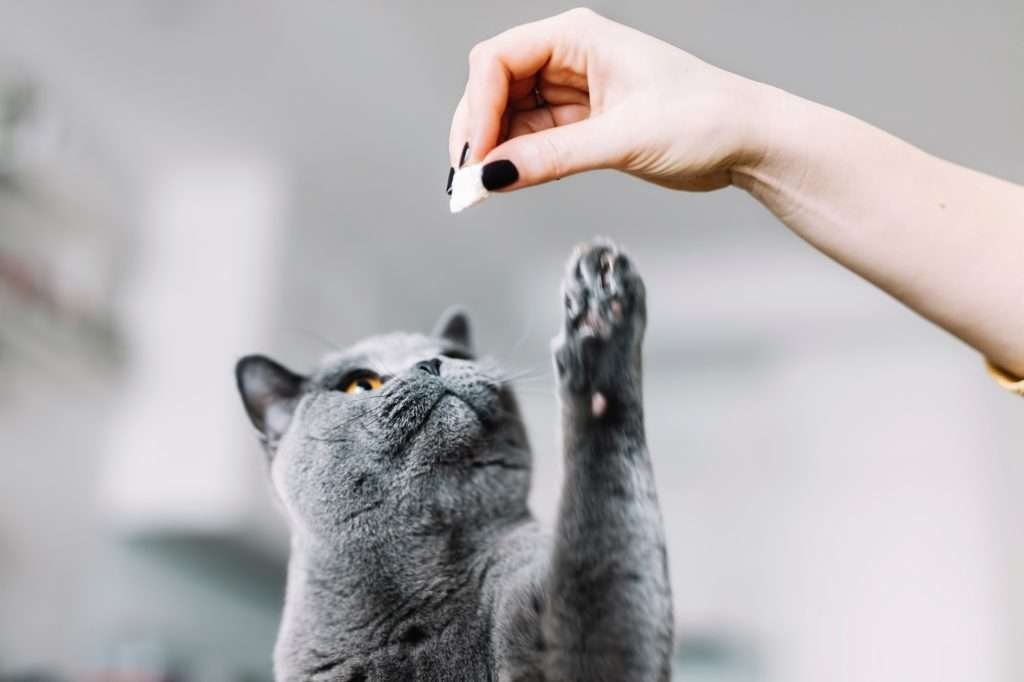
Less than you might think. The World Small Animal Veterinary Association (WSAVA) recommends that treats, table food included, make up less than 10% of a cat’s daily calories. For an average healthy adult cat of about 4.5 kg (10 lb), that is a treat budget of roughly 24 calories a day.
Plain roasted turkey breast has about 147 calories per 100 grams, according to USDA FoodData Central. So about 16 grams of breast meat (just over half an ounce, or a few bite-size pieces) uses up that cat’s entire treat allowance for the day. Dark meat is richer, so the portion should be even smaller.
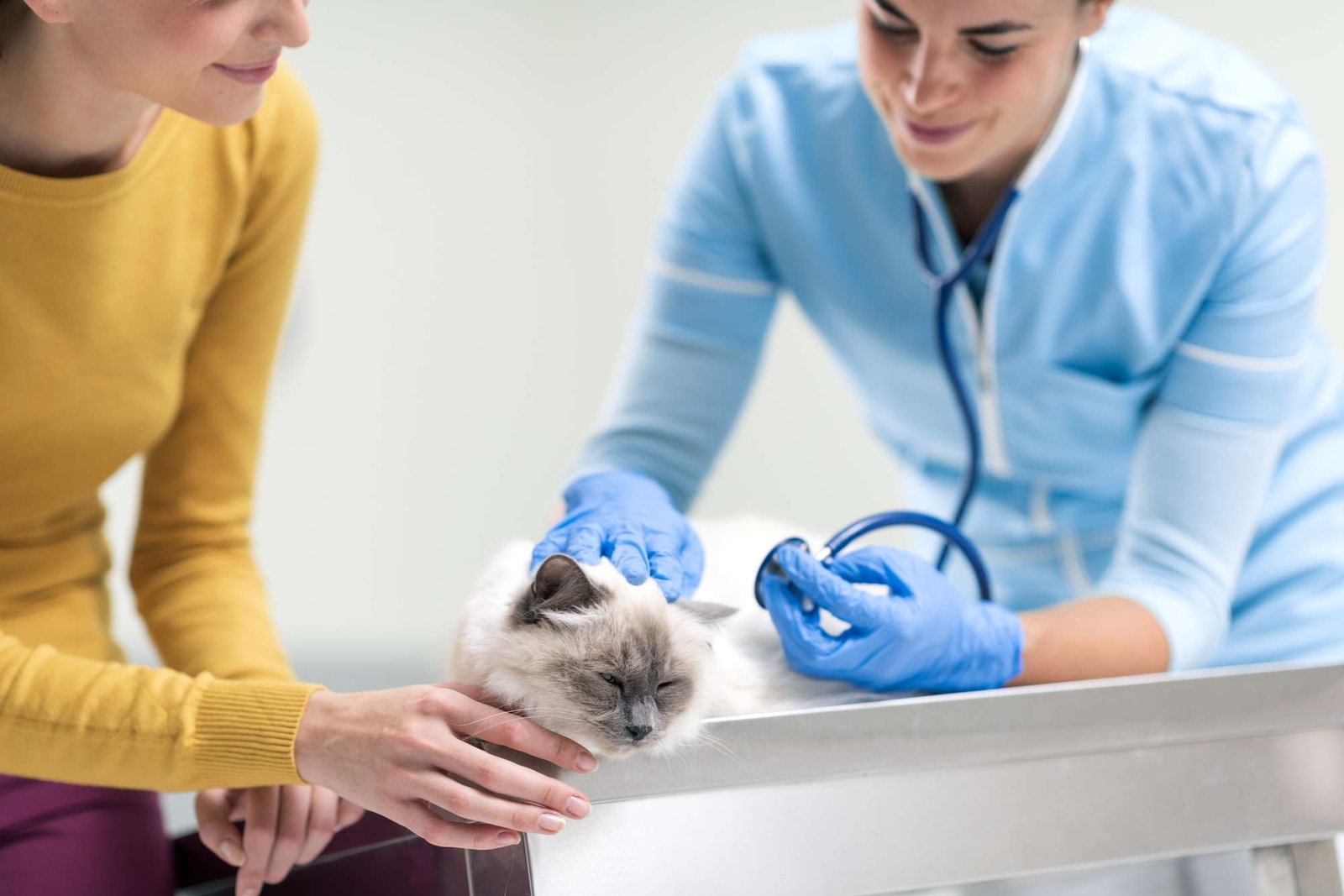
If your cat is overweight, has a medical condition or eats a prescription diet, for example a urinary diet for struvite crystals, ask your veterinarian before adding extras. As VCA Animal Hospitals points out, some veterinary diets may not work properly when other foods are added.
Turkey Skin, Fat and Drippings
Skip them. The FDA warns that fatty table scraps, such as the skin from a roasted turkey, can cause an upset stomach and even pancreatitis, a painful and potentially life-threatening inflammation of the pancreas. In cats the signs can be easy to miss: the FDA notes they may be limited to a decreased appetite and weight loss.
Turkey Bones
Never give your cat turkey bones, including the neck and the carcass. Cooked bones splinter, the ASPCA calls poultry bones a major choking hazard, and its list of people foods to avoid warns that swallowed bones can injure or block the digestive tract, sometimes badly enough to need surgery.
Raw or Undercooked Turkey
Don’t share raw or pink turkey. Raw poultry can carry Salmonella, and the Cornell Feline Health Center does not recommend raw meat as a food or treat for cats because it can transmit toxoplasmosis and other infectious diseases. If you have questions about raw poultry and avian flu, read our guide to H5N1 bird flu and cats.
Deli Turkey, Smoked Turkey and Turkey Bacon
Processed turkey is much saltier than plain roasted meat and often contains added flavorings. A stolen nibble is unlikely to cause harm, but it is not a good treat: the ASPCA notes that too much salt can cause vomiting, diarrhea, tremors and even seizures.
Thanksgiving Foods for Cats at a Glance
Here is how the rest of the table stacks up. “Small amounts” means a taste, not a serving, and only when the food is plain.
| Food | Can cats eat it? | Why |
|---|---|---|
| Plain cooked turkey, no skin or bones | Yes, small amounts | Lean protein; stay under the 10% treat limit |
| Turkey skin, fat and drippings | No | Fatty; can cause stomach upset or pancreatitis |
| Turkey bones, neck and carcass | No | Splinter; choking and gut injury |
| Gravy | No | Fatty drippings, salty bouillon, often onion or garlic |
| Stuffing or dressing | No | Usually made with onion, garlic or chives |
| Ham | Not recommended | Salty, fatty rind, sugary glazes |
| Mashed potatoes | No | Butter, milk or cream, often garlic |
| Plain sweet potato or green beans | Small amounts | Fine plain; no butter, sugar or marshmallows |
| Green bean casserole | No | Fried onions and a creamy sauce |
| Plain canned pumpkin (100% pumpkin) | Small amounts | Fiber; never pie filling |
| Pumpkin pie, whipped cream, ice cream | No | Sugar, fat, dairy and spices |
| Cranberry sauce | Skip it | Mostly sugar |
| Baked bread or rolls | A crumb at most | Little nutrition for a carnivore |
| Raw yeast dough | No | Expands in the stomach and produces alcohol |
| Grapes, raisins and currants | No | Toxic to cats |
| Pecans and other nuts | No | Oily; vomiting, diarrhea, pancreatitis |
| Chocolate or xylitol desserts | No | Toxic |
| Milk, cream and cheese | No | Many cats are lactose intolerant |
| Alcohol, wine and eggnog | No | Alcohol is toxic; eggnog adds dairy and sugar |
| Corn on the cob | No | Cobs can block the intestines |
Can Cats Eat Ham?
Ham is the other holiday centerpiece cats find hard to resist. A tiny bite of lean ham will not poison a healthy cat, but it is a poor treat: ham is cured with a lot of salt, fat trimmings such as the rind are exactly the kind of scrap the FDA warns can lead to pancreatitis, and glazes add sugar and spices.
If your cat has kidney disease or another chronic condition, ask your veterinarian before sharing anything salty. For a look at daily life with a kidney-disease cat, read Sonoma’s story.
The Biggest Holiday Dangers Aren’t the Turkey
Onions and Garlic Are Everywhere
Onions, garlic, leeks, shallots and chives belong to the allium family, and cats are the most sensitive species of all. According to the Merck Veterinary Manual, poisoning has been reported in cats after eating less than a teaspoon of cooked onion, and raw, cooked, dried and powdered forms are all dangerous. Alliums damage red blood cells, and signs such as weakness, pale gums and lethargy can take several days to appear.
On a holiday table, alliums turn up in the stuffing, the gravy, the mashed potatoes, the green bean casserole and the seasoning on the bird itself, one more reason to set your cat’s turkey aside before you start cooking.
String, Foil and Roasting Bags
The string that trusses the turkey, foil, plastic wrap and oven bags all smell like dinner. String is especially tempting to cats, and the FDA warns that swallowed string, ribbon and tinsel can cause serious stomach and intestinal damage. Put packaging straight into a lidded bin.
The Trash Can
A trash bag full of bones, fat and leftovers is a jackpot for a curious cat. The ASPCA suggests emptying the trash throughout the day, and the FDA recommends wrapping up scraps and bones and using a bin your pets can’t get into.
Lilies in Holiday Bouquets
If guests bring flowers, check them before they go on the table. True lilies and daylilies (including Asiatic, Easter, Oriental, Stargazer and tiger lilies) are extremely dangerous for cats. The FDA warns that eating a small piece of a leaf or petal, licking pollen off their fur or drinking the vase water can cause fatal kidney failure in less than three days.
Guests, Noise and Open Doors
A full house is stressful for many cats, and guests bring hazards of their own: dropped food, open doors and medications in purses and coat pockets. The ASPCA recommends giving pets a quiet place to retreat and reminding guests to keep personal items out of reach. A bedroom with a bed, water and a litter box works well, and if your cat protests closed doors, these closed-door solutions can help.
A Cat-Safe Holiday Plan
A few small habits keep the day happy for everyone:
- Set aside a few pieces of plain, cooked turkey before you season the bird.
- Mix them into your cat’s usual dinner, or tuck them into a puzzle feeder to keep your cat busy while you eat. Both are ASPCA suggestions. Our cat enrichment guide has more ideas.
- Ask guests not to share food from their plates.
- Clear plates quickly and keep the trash in a lidded bin.
- Keep lilies out of the house, and string and foil off the counters.
- Give your cat a quiet room away from the crowd.

What to Do If Your Cat Eats Something It Shouldn’t
Call your veterinarian or ASPCA Poison Control at (888) 426-4435 right away. Note what your cat ate, roughly how much and when, and keep the packaging or recipe handy. Do not try to make your cat vomit at home unless a veterinarian tells you to.
Don’t wait for symptoms. With onions, garlic and lilies, the damage begins long before you can see it, and the FDA notes that cats treated 18 hours or more after eating a lily generally have irreversible kidney failure. Over the next few days, watch for vomiting, diarrhea, drooling, lethargy, loss of appetite, hiding or a painful belly. After-hours emergencies can be expensive, which is one reason some owners consider pet insurance.
Frequently Asked Questions
Is turkey good for cats?
Plain, cooked turkey is a lean, high-protein meat and a common ingredient in cat food, so it makes a good treat in small amounts. It is not a complete diet on its own, though; your cat still needs a complete and balanced cat food.
Can kittens eat turkey?
A tiny taste of plain, cooked, boneless turkey is fine for most kittens, but keep it very small. Kittens need the nutrition of a complete kitten food, and their small size means their treat budget is tiny.
Can cats eat turkey deli meat?
A small nibble is not toxic, but deli turkey is much saltier than plain roasted turkey and may contain added flavorings. Plain, home-cooked turkey is the better choice.
Can cats eat gravy?
No. Gravy is made from fatty drippings and often bouillon, which is very high in sodium, and it usually contains onion or garlic. Even a little can upset a cat’s stomach.
My cat ate a turkey bone. What should I do?
Call your veterinarian for advice, even if your cat seems fine, and don’t try to make your cat vomit. Signs of a problem, such as vomiting, gagging, not eating, constipation or belly pain, can show up hours to days later.
So, can cats eat turkey? Yes, as long as it is plain and the portion is small. Thanksgiving is about sharing, and your cat can share in it too, with a few plain bites of turkey and a quiet corner away from the bustle. Keep the skin, bones, rich sides and anything made with onion or garlic for the humans, and everyone will have something to be thankful for. You’ll find more practical guides in our Cat Care section.
This article is for general information and is not a substitute for advice from your veterinarian. See our disclaimer.
Sources: ASPCA – Thanksgiving Safety Tips; ASPCA Poison Control – People Foods to Avoid Feeding Your Pets; FDA – Keep Your Dogs and Cats Safe From Holiday Hazards; FDA – Lovely Lilies and Curious Cats; Merck Veterinary Manual – Garlic and Onion (Allium spp) Toxicosis in Animals; WSAVA – Feeding Treats to Your Cat; Cornell Feline Health Center – Feeding Your Cat; VCA Animal Hospitals – Cat Treats; USDA FoodData Central – turkey breast, meat only, roasted (FDC ID 171496); PetMD – Can Cats Eat Pumpkin?.