
The first time I heard Matisse cry, it broke my heart into a thousand pieces. Not the typical demanding meow for attention or the gentle purr when settling into my lap. This was something else entirely. This was pure anguish echoing through my apartment walls, a sound so raw and desperate that I was worried the neighbors would start asking if everything was okay. Little did I know, this was my introduction to cat separation anxiety, a journey that would teach me more about feline emotional complexity than I ever imagined possible.
- When Attachment Becomes Anxiety
- Understanding the Signs of Cat Separation Anxiety
- What Causes Cat Separation Anxiety?
- How I Learned to Help My Anxious Cat
- Creating a Calming Environment for an Anxious Cat
- Natural Solutions and Calming Strategies
- The Role of Professional Help in Treating Cat Anxiety
- What I Wish I’d Known About Cat Anxiety
- Building Confidence in an Anxious Cat
- The Journey Continues: Living with Feline Separation Anxiety
- Hope for Fellow Cat Parents
- Practical Wisdom for the Journey Ahead
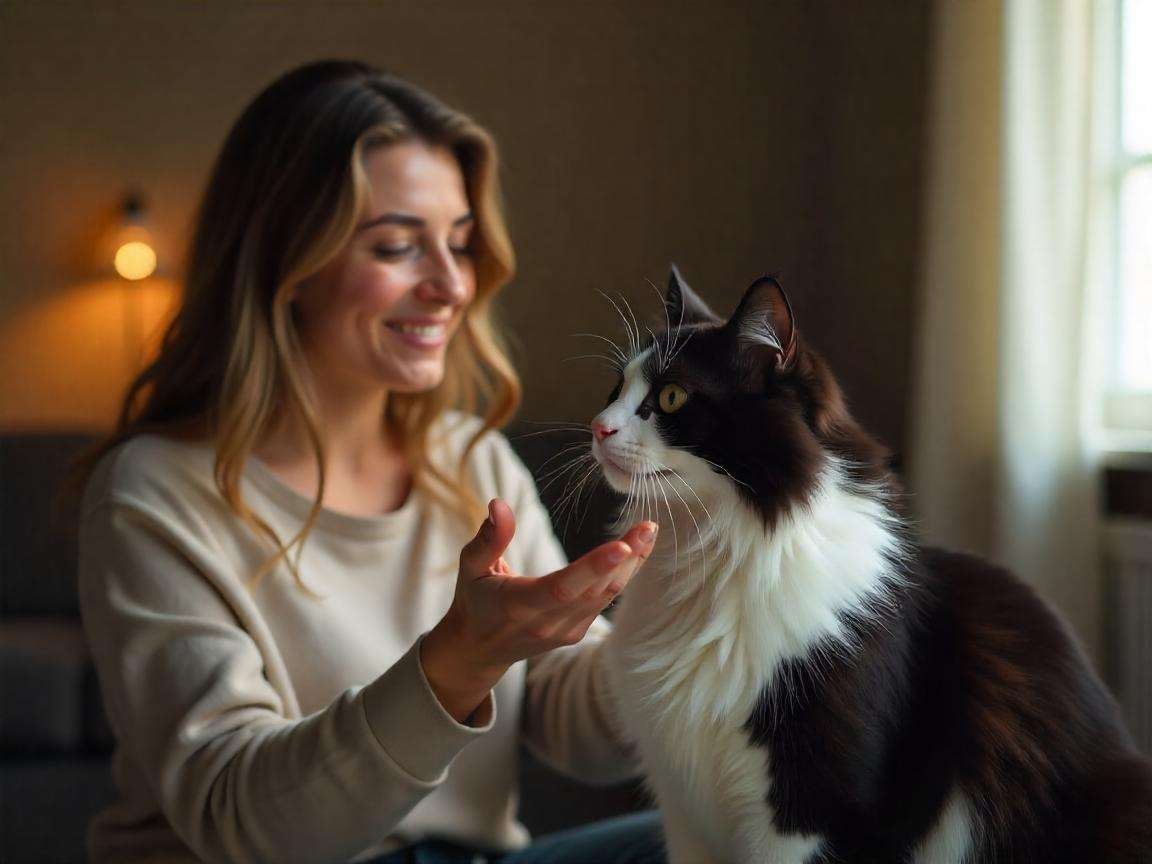
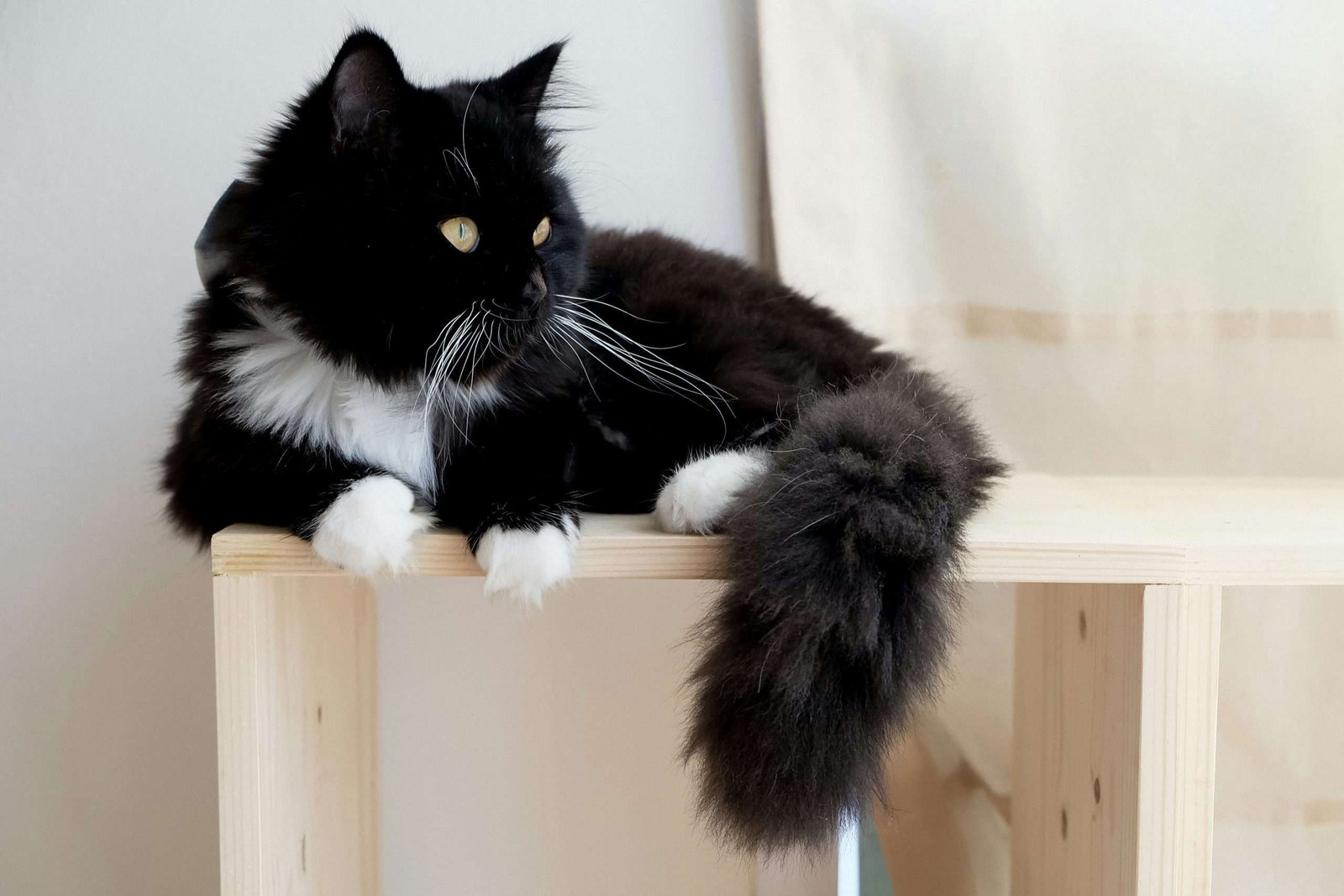
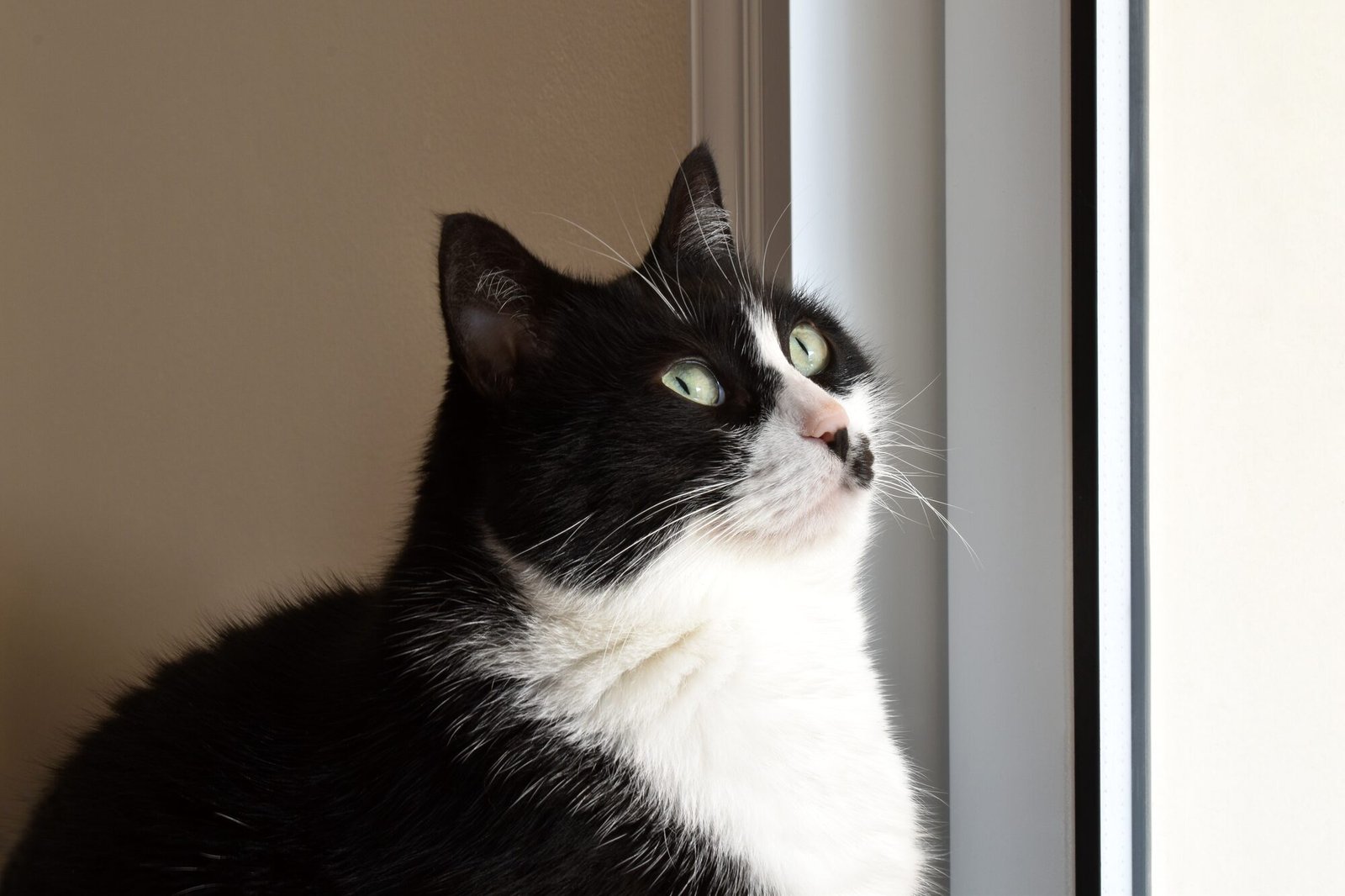
My handsome tuxedo boy Matisse, with his pristine white bib and perfectly symmetrical facial markings, had always been what I lovingly called a “velcro cat.” From the moment I adopted him, he followed me from room to room like a devoted shadow, his emerald eyes tracking my every movement. I initially found his attachment endearing. Who doesn’t want to feel loved and needed by their feline companion? But what started as adorable clinginess gradually evolved into something much more challenging: cat separation anxiety.
When Attachment Becomes Anxiety
The transformation wasn’t immediate. For months, Matisse seemed like the perfect companion, content to curl up nearby while I worked from home during the pandemic. His cat behavior was charming and predictable. He’d wake me with staring down and breathing on me or pawing my face, supervise my morning coffee preparation from his perch on the counter, and maintain his dignified presence throughout the day. But when the world began opening up again and I needed to return to in-person meetings, everything changed.
Cat anxiety symptoms can be surprisingly subtle at first. I noticed Matisse becoming restless whenever I reached for my keys, his usual composed demeanor shifting into something more frantic. He’d pace circles around my feet as I gathered my things, his tail twitching with an energy that felt different from his usual morning enthusiasm. The real revelation came when I installed a pet camera to check on him during a particularly long workday.
Watching the footage later that evening, I witnessed the full extent of his distress. The moment the door clicked shut behind me, my dignified gentleman transformed into a creature consumed by panic. The excessive vocalization was heartbreaking: long, mournful cries that seemed to echo from the depths of his soul. Between the crying sessions, he’d pace the apartment restlessly, checking every window and door as if willing me to materialize. This wasn’t just missing me; this was genuine emotional distress.
Understanding the Signs of Cat Separation Anxiety
Living with an anxious cat taught me to recognize the subtle language of feline distress. Signs of separation anxiety in cats extend far beyond the obvious crying and can manifest in ways that might initially seem unrelated to your absence. Matisse began exhibiting several concerning behaviors that painted a clear picture of his emotional state.
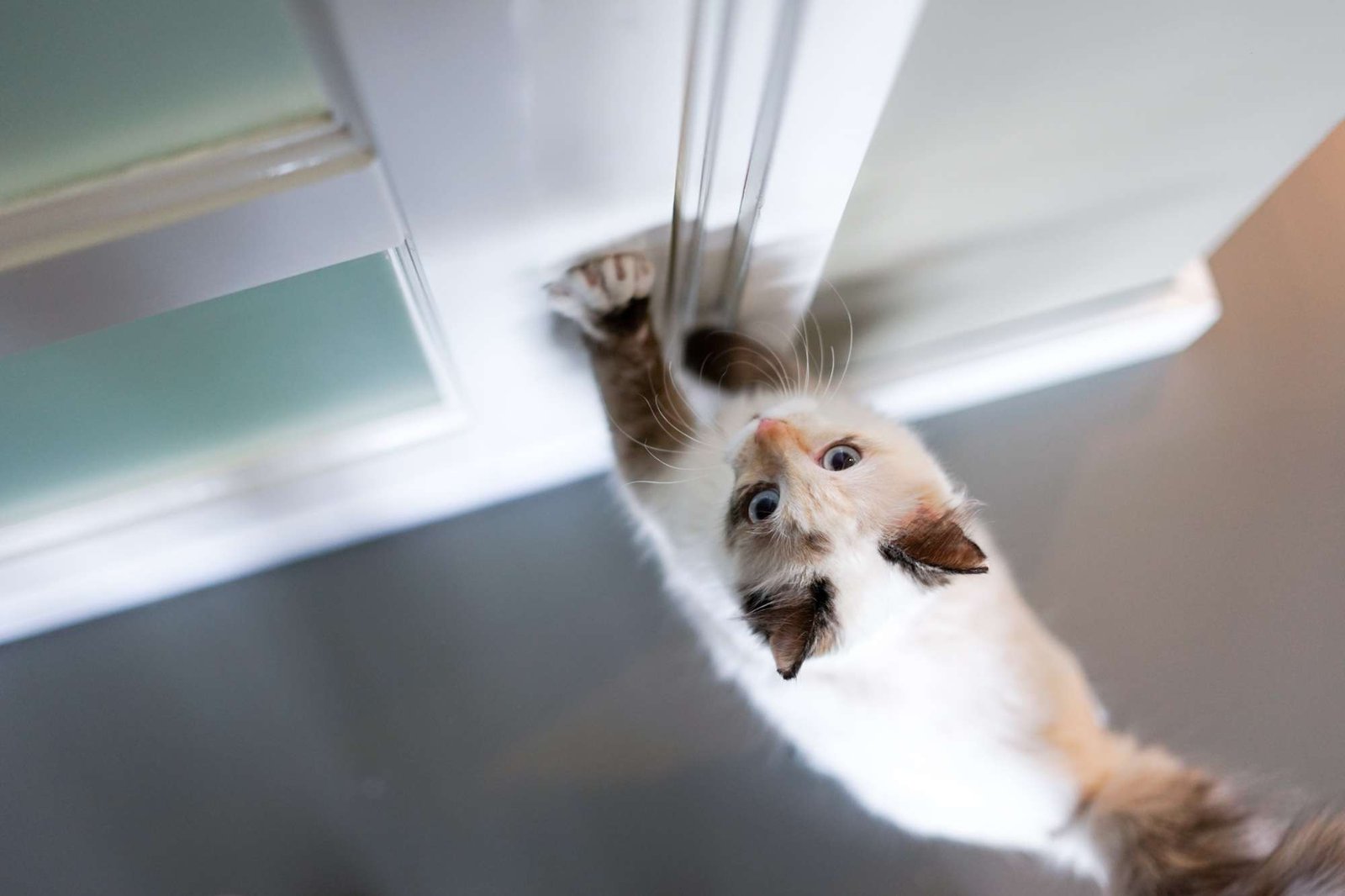
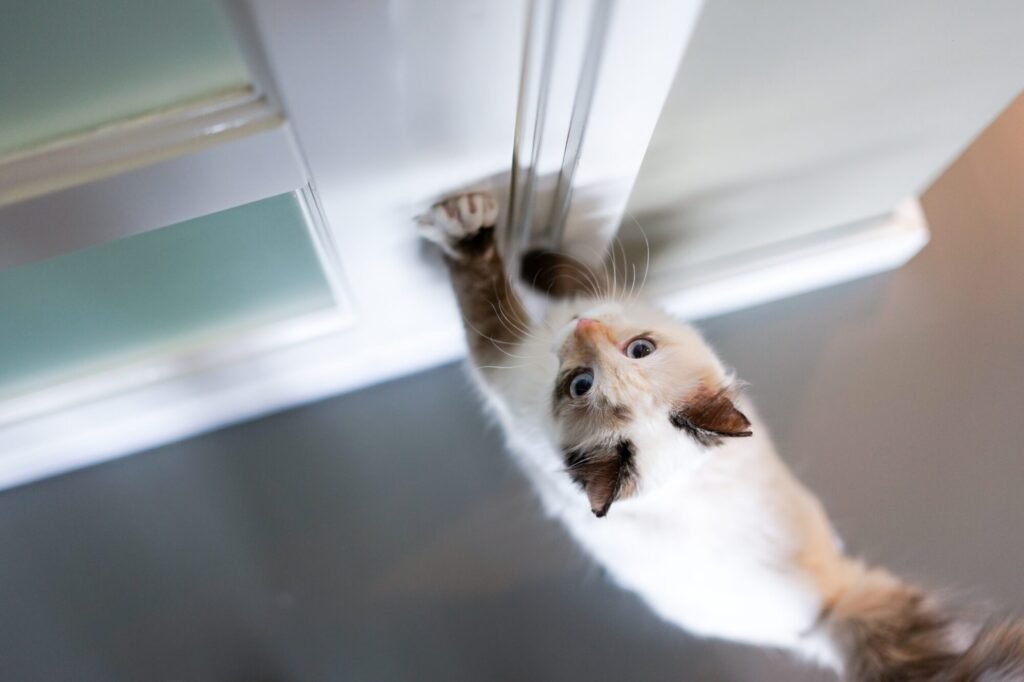
The destructive behavior started small: a few scratches on the doorframe where I’d last stood, some scattered papers and items from my desk or kitchen table. But it escalated to bent blinds and overturned houseplants, as if he was desperately trying to rearrange his environment to somehow bring me back. Most heartbreaking was discovering that he wasn’t eating properly while I was gone. His food bowl would remain untouched for hours, only to be frantically emptied upon my return.
Inappropriate urination became another distressing symptom. Despite being impeccably litter-trained, Matisse began leaving his mark on my bed, specifically on my comforter. Initially, I worried about medical issues, but our veterinarian confirmed what I suspected: this wasn’t a health problem but an emotional one. He was surrounding himself with my scent as a coping mechanism for his anxiety.
The excessive self-grooming was perhaps the most concerning development. Matisse began obsessively licking his beautiful black and white coat until small bald patches appeared on his legs and stomach. When stressed cats can’t control their environment, they often turn that need for control inward, sometimes to their own detriment.
What Causes Cat Separation Anxiety?
Understanding what causes cat separation anxiety became crucial to helping Matisse heal. Our veterinary behaviorist explained that multiple factors likely contributed to his condition. Tuxedo cat personality traits often include heightened intelligence and strong emotional bonds with their humans, which can make them particularly susceptible to anxiety disorders.
Matisse’s history played a significant role. Rescued as a young kitten, he’d experienced early separation from his mother, which can create lasting attachment insecurities. The pandemic had also intensified our bond: spending nearly 10 months together almost constantly meant that sudden schedule changes felt particularly jarring to his sensitive system.
Limited enrichment during his early months with me had also contributed to the problem. While I thought I was providing everything he needed, I hadn’t realized how crucial mental stimulation and independence-building activities were for his emotional development. Noise phobias complicated matters further. Matisse had developed heightened sensitivity to sounds associated with my departures, from the jingle of keys to the whir of the coffee machine that preceded my morning routine.
Genetic predisposition likely played a role too. Some cats are simply born with more sensitive nervous systems, making them prone to feline anxiety disorders.
How I Learned to Help My Anxious Cat
Managing cat separation anxiety became my crash course in feline psychology, and I quickly learned that patience and consistency would be my greatest allies. The behavior modification training we began felt overwhelming at first. The process seemed counterintuitive and painfully slow. But working with our veterinary behaviorist, I developed a plan specifically tailored to Matisse’s triggers and personality.
We started with desensitizing departure cues, those everyday actions that signal an impending departure. I began picking up my keys randomly throughout the day without leaving, putting on my work shoes while staying home, and going through my leaving routine multiple times daily. Initially, Matisse would still follow me anxiously, but gradually his stress response diminished. The key was making these actions meaningless rather than predictive.

Practicing short absences became our daily ritual. We started with literal minutes. I’d step outside for thirty seconds, then return before his anxiety could fully develop. Slowly, we built up to longer periods, always staying within his comfort zone. Some days brought setbacks that left us both frustrated, but I learned that cat anxiety management isn’t linear. Progress comes in waves, with good days and challenging ones.
The most difficult aspect was never leaving him alone for longer periods during the training phase. This meant arranging friends or family, coming home on lunch breaks, and essentially restructuring my life around his healing process. Friends thought I was going overboard, but I could see the gradual changes in his demeanor and knew we were on the right path.
Creating a Calming Environment for an Anxious Cat
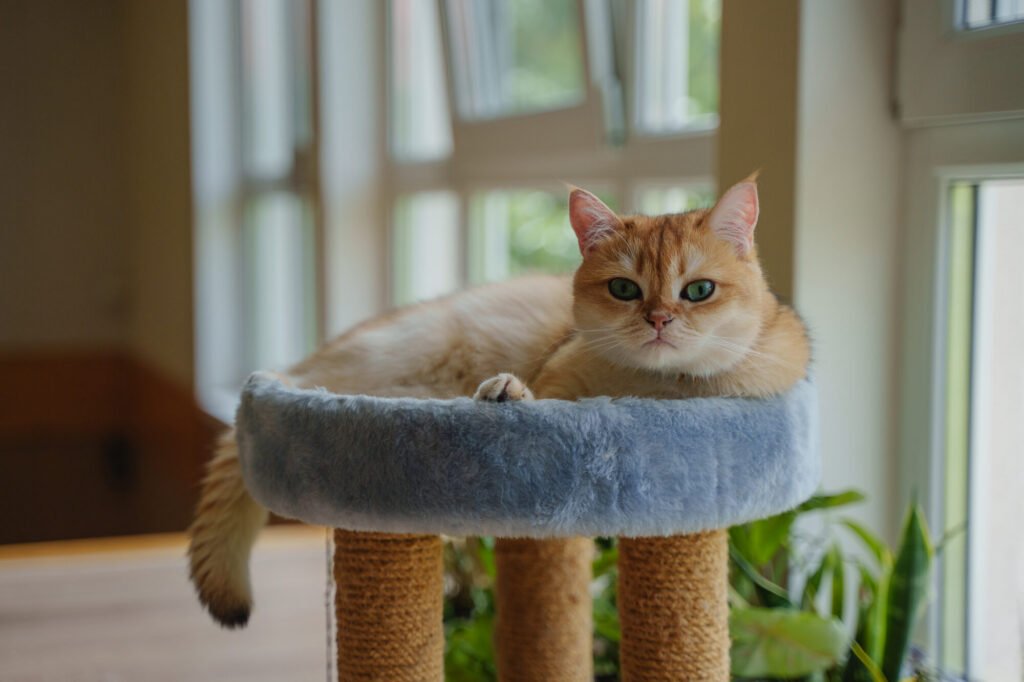
Environmental enrichment for cats became both an art and a science in our household. I discovered that cat trees and perches weren’t just furniture. They were confidence-building tools that gave Matisse elevated vantage points to survey his territory and feel more secure. His favorite spot became a tall cat condo positioned where he could see out multiple windows, allowing him to track outdoor activity and feel connected to the world beyond our walls.
Pheromone therapy proved invaluable in our anxiety management toolkit. I placed Feliway diffusers strategically throughout the apartment, creating invisible clouds of calming signals that helped regulate his emotional state. These didn’t work as expected but I instead used the spray in corners around the house. The synthetic feline facial pheromones mimicked the calming chemicals cats naturally produce when they feel safe and content. Within weeks, I noticed Matisse spending more time relaxing in areas where the spray was spritzed.
Puzzle feeders and interactive toys transformed Matisse’s daily routine from passive waiting to active engagement. Instead of simply placing his food in a bowl, I began hiding small portions throughout the apartment in various puzzle devices. This mental stimulation for cats served multiple purposes. It occupied his mind during my absence, satisfied his hunting instincts, and built confidence through successful problem-solving.
The plus-one rule became our household mantra. For every resource Matisse needed, we provided one extra: multiple water stations, several cozy sleeping spots, various scratching surfaces, and numerous hiding places. This abundance helped him feel secure knowing that resources would always be available, reducing one layer of potential anxiety.
Natural Solutions and Calming Strategies
Natural cat anxiety relief became my preferred approach, starting with the power of play therapy. I instituted intensive interactive play sessions before each departure, using wands and laser toys to engage Matisse’s predatory instincts. A tired cat is often a calmer cat, and these sessions helped him settle into peaceful naps during my absence.
Calming supplements for cats offered additional support for Matisse’s emotional regulation. After consulting with our veterinarian, we tried various options including L-theanine, thiamine and occasionally feline CBD oil. While supplements weren’t a magic cure, they seemed to take the edge off his anxiety, making behavior modification training more effective.
Creating safe spaces throughout our home gave Matisse multiple retreat options when feeling overwhelmed. I designated quiet corners with soft blankets, cozy hiding spots under furniture, and elevated perches where he could observe without being observed. These anxiety-reducing environments became his personal sanctuaries during stressful moments.
The introduction of background noise proved surprisingly helpful. Leaving white noise from air purifiers or nature sounds playing during my departures gave Matisse auditory comfort and masked potentially startling external noises. Some days I’d leave clothing with my scent in his favorite resting spots, providing olfactory reassurance of my eventual return.
The Role of Professional Help in Treating Cat Anxiety
Recognizing when to seek professional help for cat behavior was crucial to Matisse’s progress. Our initial veterinary visit ruled out underlying medical conditions that could mimic anxiety symptoms: thyroid issues, pain conditions, and neurological problems can all manifest as behavioral changes. Separation anxiety diagnosis requires careful observation and professional assessment to distinguish it from other conditions.
Working with a board-certified veterinary behaviorist opened my eyes to the complexity of feline emotional health. They helped me understand that cat behavioral problems often stem from unmet needs rather than spite or defiance. Matisse wasn’t acting out to punish me for leaving; he was expressing genuine distress in the only way he knew how.
Anti-anxiety medication eventually became part of our treatment plan. While I’d initially hoped to manage his anxiety through environmental changes alone, our behaviorist explained that medication could provide the emotional stability needed for training to be effective. The goal wasn’t to sedate Matisse but to reduce his baseline anxiety enough that he could learn new coping mechanisms.
What I Wish I’d Known About Cat Anxiety
Cat separation anxiety has unique characteristics that I wish I’d understood earlier. Research suggests that tuxedo cats often display higher intelligence and more complex emotional lives than many other coat patterns. This “tuxietude” personality can make them wonderfully engaging companions but also more susceptible to anxiety disorders.
The intensity of Matisse’s attachment wasn’t unusual for his coat pattern. Black and white cats frequently form exceptionally strong bonds with their primary caregivers, sometimes to the exclusion of other family members. Understanding this helped me reframe his clinginess not as problem behavior but as an expression of his breed-typical personality.
Cat anxiety prevention is far easier than treatment, something I learned the hard way. If I could advise new cat owners, I’d emphasize the importance of gradual independence training from kittenhood. Teaching cats to be comfortable alone, even for short periods, builds emotional resilience that serves them throughout their lives.
Building Confidence in an Anxious Cat
Confidence building for cats became our long-term project, extending far beyond separation anxiety management. I learned that anxious cats often benefit from having choices and control over their environment. Providing multiple pathways through our home, various resting spots at different heights, and predictable daily routines helped Matisse feel more secure overall.
Training basic commands gave Matisse a sense of accomplishment and strengthened our communication. Teaching him to “stay” on his favorite perch while I moved around the apartment helped him practice remaining calm during minor separations. These positive training experiences built his confidence while reinforcing that good things happen when he remains calm.
Stress reduction techniques became part of our daily routine. I discovered that anxious cat massage, gentle stroking along his spine and behind his ears, could lower his stress levels measurably. Some evenings, I’d spend time simply sitting quietly with him, allowing him to seek comfort on his terms rather than overwhelming him with attention.
The Journey Continues: Living with Feline Separation Anxiety
Nearly two years into our cat anxiety management journey, Matisse was a transformed cat, though we still had occasional challenging days. Cat separation anxiety rarely disappears completely, but it can be managed effectively with patience, consistency, and understanding.
Our morning routine included a structured departure protocol that signaled safety rather than abandonment. I’d leave special puzzle toys filled with his favorite treats, turn on his calming white noise, and maintain a calm, matter-of-fact energy during departures. The dramatic farewells I used to give him, thinking they showed love, actually heightened his anxiety by making departures feel momentous and scary.
Cat behavior continues to surprise me with its depth and complexity. Matisse had learned to self-soothe through activities like kneading his special blanket and seeking comfort in his designated safe spaces. He developed independence while maintaining our close bond, a balance that seemed impossible during our darkest anxiety days.
The pet camera remained an invaluable tool for monitoring his progress and identifying potential triggers. On difficult days, I can check in and sometimes even talk to him through the device’s speaker, providing reassurance when needed. These technological aids have become essential components of modern cat anxiety treatment.
Hope for Fellow Cat Parents
If you’re reading this while listening to your own cat’s distressed cries, please know that you’re not alone in this journey. Cat separation anxiety affects more feline families than many realize, and it’s absolutely treatable with time and dedication. Your anxious cat isn’t broken or defective. They’re simply expressing their deep emotional connection to you in the only way they know how.
How to help cats with separation anxiety isn’t always intuitive, and the process requires more patience than I ever anticipated. There were moments when I questioned whether Matisse would ever feel comfortable being alone, when his progress seemed to stall or even regress. But looking back at him now, peacefully napping in his favorite sunny spot while I worked from home, I’m reminded that healing is possible.
The bond between anxious cats and their owners is often extraordinarily deep, forged through the vulnerability of shared struggle. Matisse taught me about resilience, patience, and the profound emotional lives of our feline companions. His tuxedo cat personality shined brighter once that anxiety no longer dimmed his natural confidence and curiosity.
Living with an anxious tuxedo cat has expanded my understanding of pet mental health and deepened my appreciation for the complex inner lives of our animal companions. Every small victory (the first time he ate normally during my absence, the morning he didn’t follow me to the door, the day I came home to find him peacefully sleeping rather than anxiously waiting) felt like a celebration worthy of champagne.
Practical Wisdom for the Journey Ahead
Cat behavioral problems often improve with time, but feline anxiety management requires ongoing attention and occasional adjustments. Seasonal changes, household disruptions, or alterations to routine can sometimes trigger temporary setbacks. I’ve learned to view these challenges as opportunities for growth rather than failures of our progress.
The cat anxiety treatment journey taught me that success isn’t measured by perfect behavior but by overall quality of life improvements. Matisse may always be a sensitive soul who prefered my company to solitude, and that’s perfectly okay. Our goal was never to change his fundamental personality but to help him cope with the realities of modern life where some separation is inevitable.
Natural anxiety relief for cats continues to play a central role in our daily routine. Fresh catnip plants, rotating toy selections, and regular environmental changes kept Matisse mentally engaged and emotionally balanced. I’ve discovered that preventing cat anxiety through proactive enrichment is far more effective than reactive treatment.
For other cat owners dealing with similar challenges, remember that these intelligent, emotionally complex cats often require more mental stimulation and environmental variety than their more laid-back counterparts. Cat separation anxiety may be more common precisely because of their heightened intelligence and capacity for deep emotional attachment.
The cat stress management techniques we’ve developed serve us well beyond separation scenarios. During thunderstorms, veterinary visits, or household disruptions, Matisse then had a toolkit of coping strategies that helped him navigate challenging situations with greater resilience.
As I wrote this, Matisse was purring contentedly nearby, I’m filled with gratitude for the journey that brought us to this peaceful moment. Cat separation anxiety challenged both of us to grow in unexpected ways, ultimately strengthening our bond while teaching valuable lessons about patience, understanding, and the remarkable emotional depth of our feline companions. The tuxedo cat who once couldn’t bear to let me leave has become more confident, and secure companion who knows that departures are temporary but love is permanent.
Helping cats with anxiety isn’t just about managing symptoms. It’s about honoring their emotional needs while building the skills they need to thrive in our “hooman-centered” world. Matisse’s story continued to unfold, each day bringing new small victories and deeper understanding of the complex, wonderful creature who chose to share his life with mine.