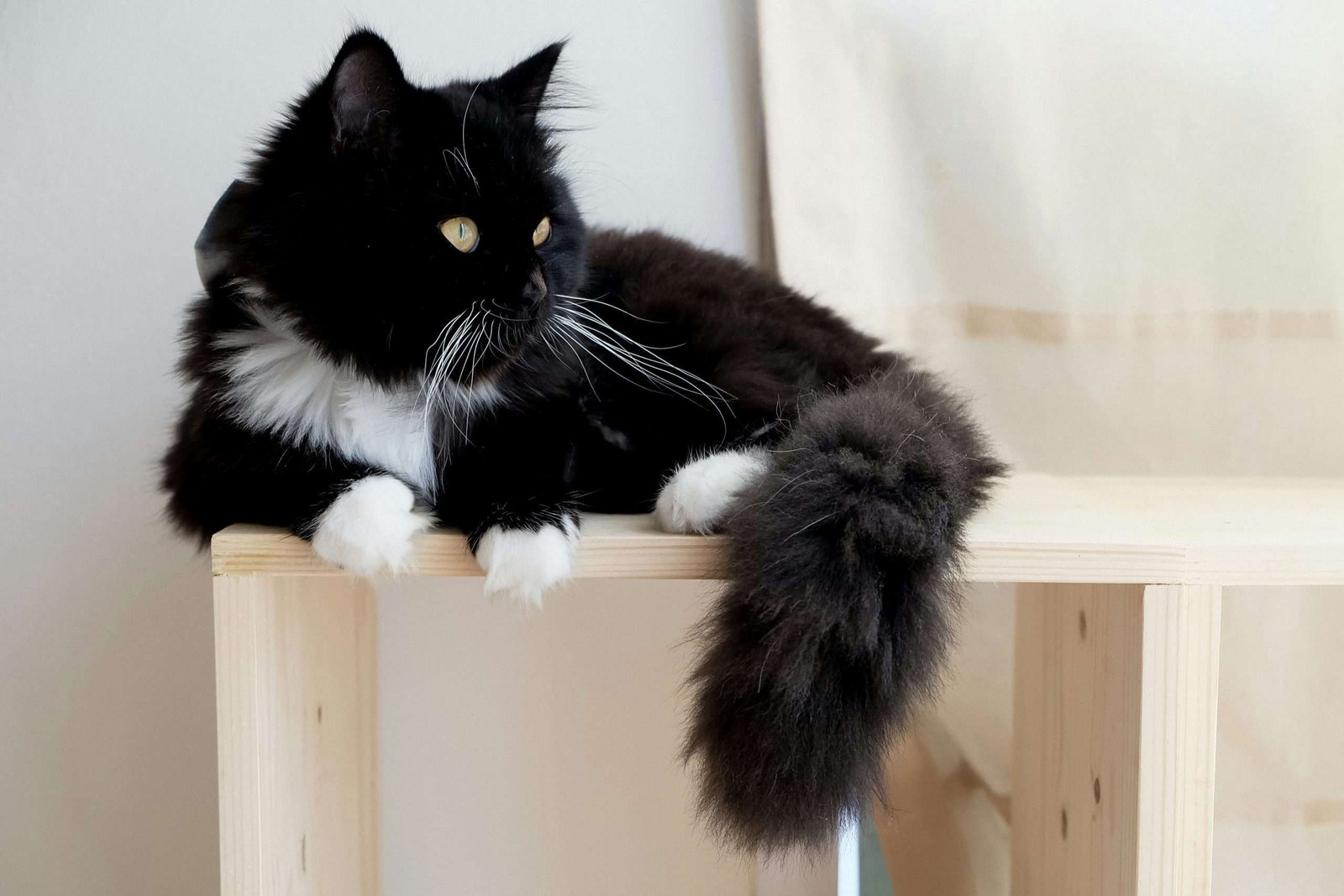

Okay, so it’s a lazy Sunday afternoon, and I’m lounging on my couch watching my cat, Isaac, who is perched majestically looking out the sliding glass door. He’s staring intensely at something outside, probably a bird or a particularly interesting leaf, when it hit me: does Isaac have friends? Like, actual cat friends he’d hang out with if he wasn’t kept inside my apartment with just me for company? Would he be texting other cats to grab coffee if he had opposable thumbs and a smartphone?
- The Myth of the Antisocial Cat
- The Complex World of Cat Friendships
- Signs Two Cats Are Friends (What Researchers Call Preferred Associates)
- The Friendship Recipe
- The Indoor-Outdoor Debate
- Cross-Species Friendships
- So Should Your Cat Have a Friend?
- Do Cats Get Lonely?
- Should I Get a Second Cat? A Quick Checklist
- My Own Experience
- The Truth About Cat Friendship
- Cat Friends FAQ
- Sources
Quick answer: Yes, cats can have real friends! Researchers call them “preferred associates,” and true cat friends groom each other, sleep touching, and greet with nose touches and raised tails. But plenty of cats are happiest as the only cat, so a second cat is a maybe, not a must.
I’ve always kind of assumed cats are these independent creatures who tolerate us humans only because we provide food and clean their litter boxes. But lately, I’ve been wondering if there’s more to their social lives than meets the eye. And honestly? The answer is pretty interesting.
The Myth of the Antisocial Cat

So many of us have this image of cats as these aloof, solitary creatures who merely tolerate human presence while secretly plotting world domination. (I mean, have you seen how Isaac looks at me sometimes? Definitely plotting something.) But this whole “cats are antisocial loners” narrative is definately not entirely accurate.
Turns out, cats have been hanging around humans for about 10,000 years! That’s a long time to be in a relationship just for the kibble, right? They started out as our rodent control squad and gradually evolved into the professional couch-warmers and keyboard-occupiers we know today. More than 30 percent of households in the US and Australia have at least one cat family member. That’s a lot of cats living in close quarters with humans and, often, with other pets.
And here’s the thing: cats actually DO show us affection! When your cat seeks out your company, rubs against your legs, or insists on sleeping on your face (seriously, Isaac, I need to breathe), that’s their way of saying, “Hey human, you’re alright.” Some research even suggests cats have developed specific meows just to communicate with us. Like they’ve created a special language just for their humans. If that’s not friendship, I don’t know what is!
The Complex World of Cat Friendships
But what about cat-to-cat friendships? Can two cats actually be besties?
I remember when I adopted a third cat, thinking my two cats needed a “friend.” Three months, multiple scratches, and one destroyed couch later, I was questioning my life choices. The cats eventually came to a tense truce, but best friends? Not exactly.
Here’s what makes cat friendships so complex. When cats show friendship to each other, they do things like groom each other (those adorable moments when they lick each other’s fur), rub heads, hang out together, and engage in play. On the flip side, if they’re charging at each other, fighting, or engaging in aggressive chasing, that’s cat-speak for “I don’t like you, stay away from my territory!”
Unlike dogs or even us humans, cats don’t have many ways to smooth things over after a fight. They generally prefer to run away or avoid each other rather than make up. There’s no cat equivalent of “I’m sorry, let’s grab a drink and talk this out.” It’s more like, “I’ll be under the bed for the next three days, don’t look at me.”
Signs Two Cats Are Friends (What Researchers Call Preferred Associates)
Scientists actually have a name for cat besties: preferred associates. These cats hang out within about three feet of each other more often than with anyone else, and not just at the food bowl. Here’s how to spot true cat friends:
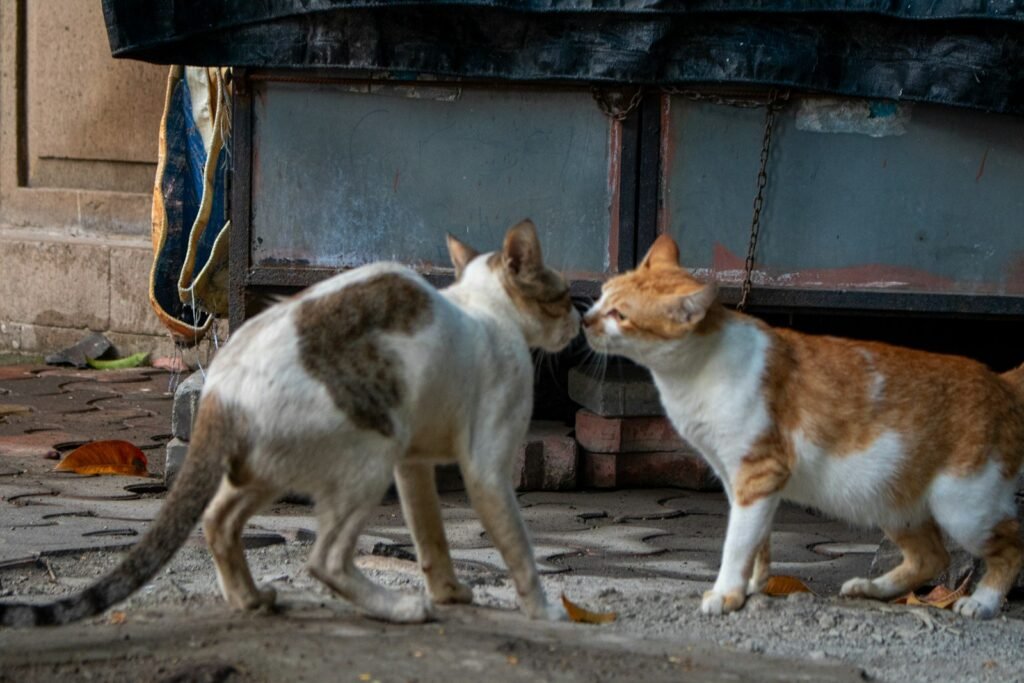
- Nose touches. A quick nose-to-nose boop is a greeting cats use most with their favorite companions.
- Tails up. A tail held straight up as one cat walks over to another signals friendly intentions, and a head rub often follows.
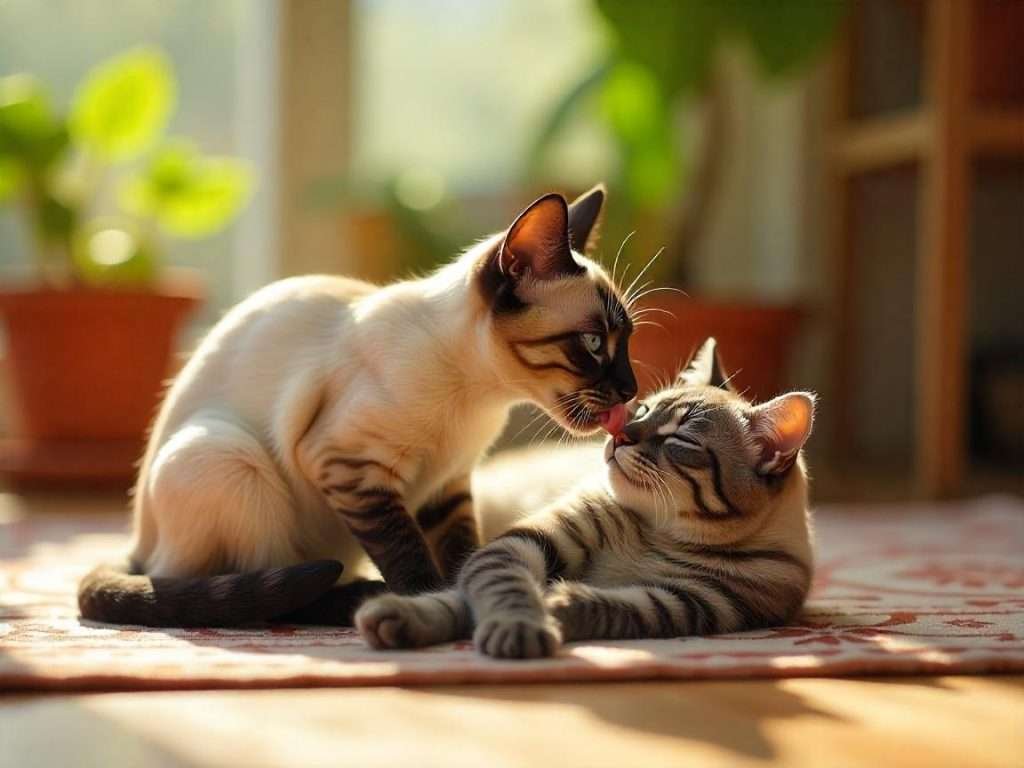
- Grooming and rubbing. Friends lick each other’s heads and necks and rub cheeks and bodies, which also blends their scents into a shared family smell.
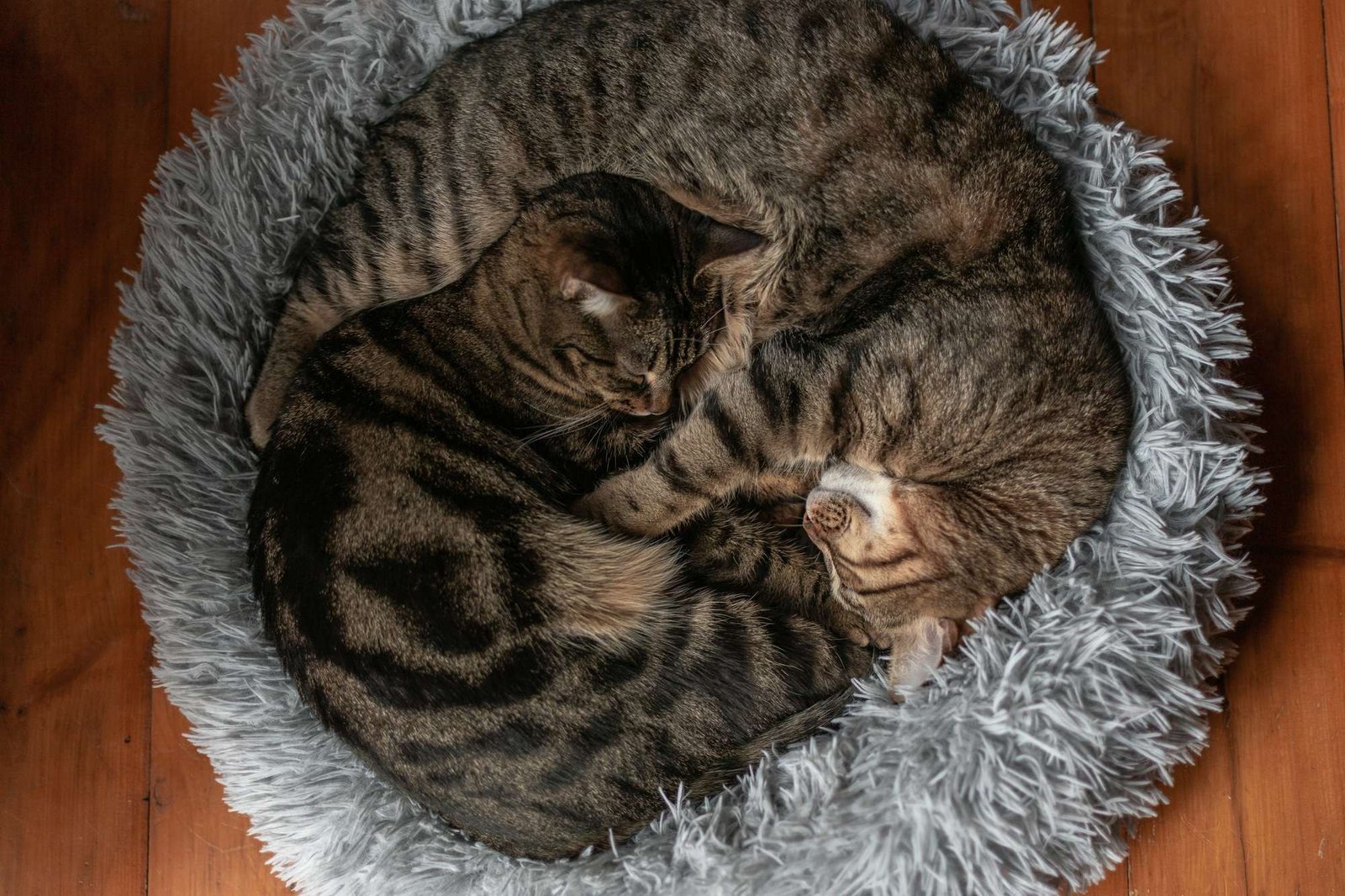
- Sleeping touching. Curling up together (sometimes partly on top of each other!) is one of the clearest signs of a bond.
- Playing nicely. Friendly wrestling and chasing where they take turns, with ears forward and no hissing.
On the flip side, peaceful roommates aren’t always friends. Staring, blocking the litter box or food bowl, and leaving the room when the other cat walks in are all signs of tension.
The Friendship Recipe
So what’s the secret recipe for cat friendships? According to research on free-ranging cats (those not living in homes), close cat relationships are more likely when:
A lot of the research in this post comes from a great roundup by animal behavior experts at La Trobe University, published in The Conversation.
- They’re both female (girl power!)
- They grow up together (kitten besties 4 life)
- They’re closely related (keeping it in the family)
- They live in close proximity (proximity makes the heart grow fonder?)
For our indoor cats, the dynamics shift a bit. Cats who were introduced when they were young, who are related, and who have lived together for a long time tend to form the strongest bonds. But interestingly, some studies suggest that among fixed cats, male pairs tend to be closer than male-female pairs, with female pairs being the least likely to become friends. Who would’ve thought?
And that first introduction? SUPER important. First impressions matter in the cat world just as much as they do in ours. Maybe even more.
The Indoor-Outdoor Debate
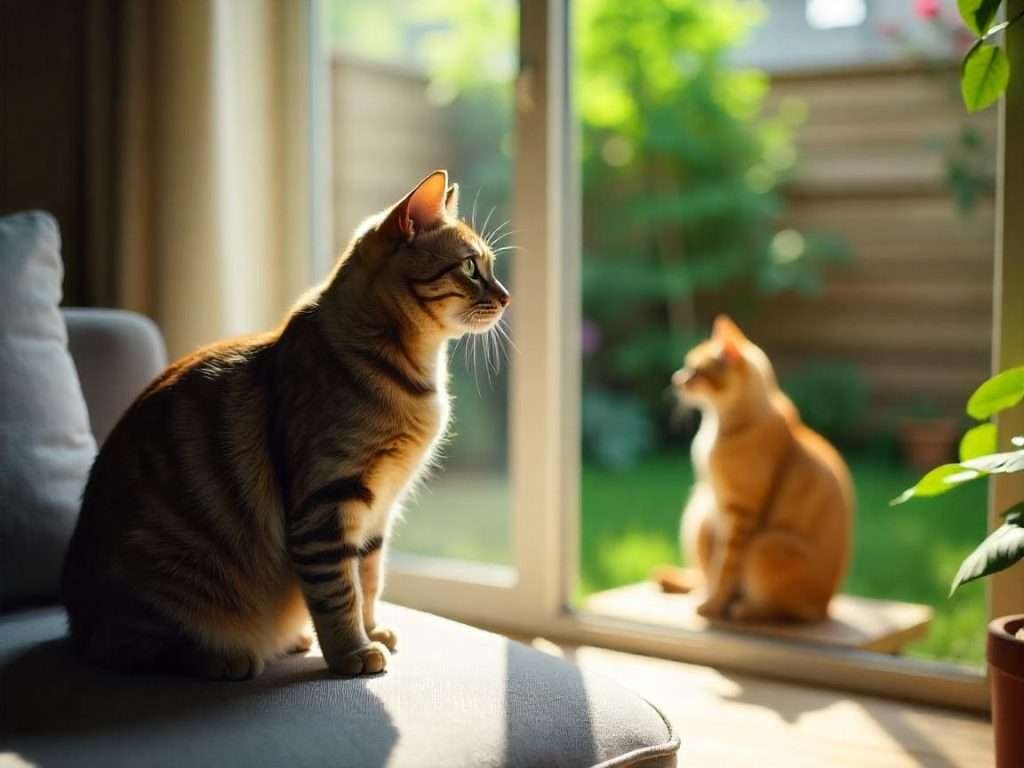
Now here’s where things get even more complicated. What about cats who go outside? Do they have neighborhood friends?
The short answer is: probably not many. Most cats are naturally territorial and competitive when they’re outside. They’ll typically try to avoid confrontations, but sometimes they end up in fights, especially if food is involved or if they wander into another cat’s territory.
And get this: two cats living in the same house are actually MORE likely to fight with each other if they’re allowed to go outside! Apparently bringing in unfamiliar scents from the outside world can trigger territorial disputes. I know this all too well when one of the cats goes to the vet and when we come back home, Dexter acts like it’s fight club. It’s like when your roommate comes home smelling like a different brand of perfume, and you’re like, “WHO HAVE YOU BEEN HANGING OUT WITH?”
Of course, there are other reasons to keep cats indoors, especially in places like Australia where outdoor cats can decimate local wildlife populations. Plus, there are dangers like traffic, mean neighbors, or just general misadventure. (I once had a cat growing up, Hazel, who regularly came home with random objects she’d “found”, including live mice, lizards, baby birds or bugs. So much trouble!)
Cross-Species Friendships
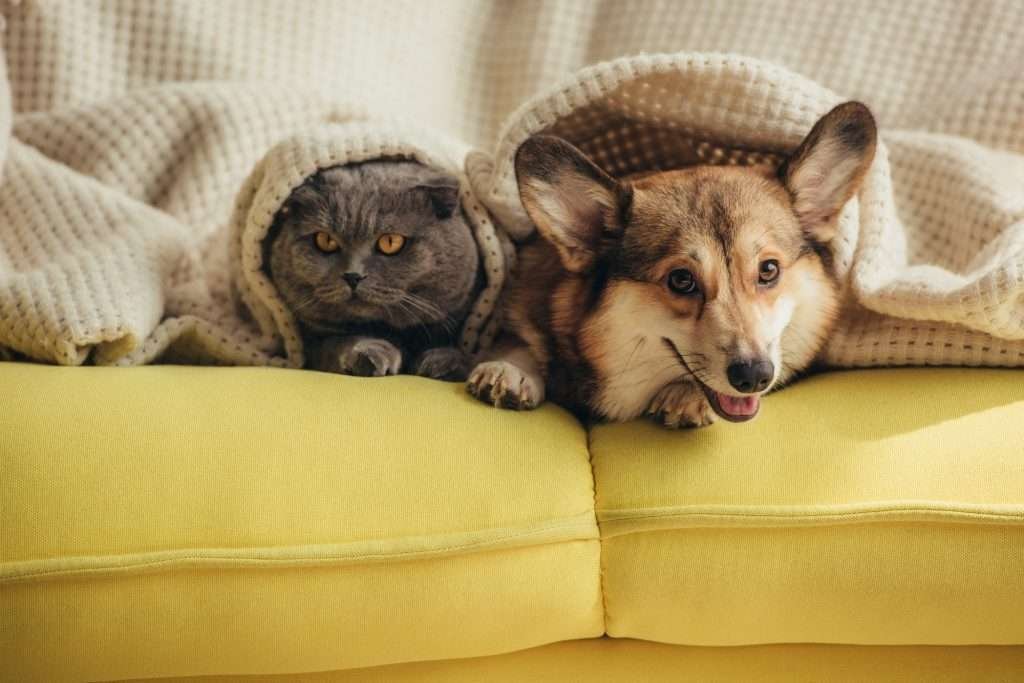
But what about cats being friends with other animals? Like dogs? We’ve all seen those heartwarming videos of cats and dogs cuddling or playing together.
Despite the whole “fighting like cats and dogs” stereotype, these two species can actually form some beautiful friendships. They can end up sleeping together, playing together, and generally being adorable together. But once again, early exposure and slow, careful introductions are key.
Interestingly, indoor cats tend to be friendlier with dogs than outdoor cats. This might be because outdoor cats meet multiple dogs who aren’t necessarily happy to see a cat in their territory. (Can you blame them? I’d be startled too if I found a random cat staring at me from behind a bush.)
So Should Your Cat Have a Friend?
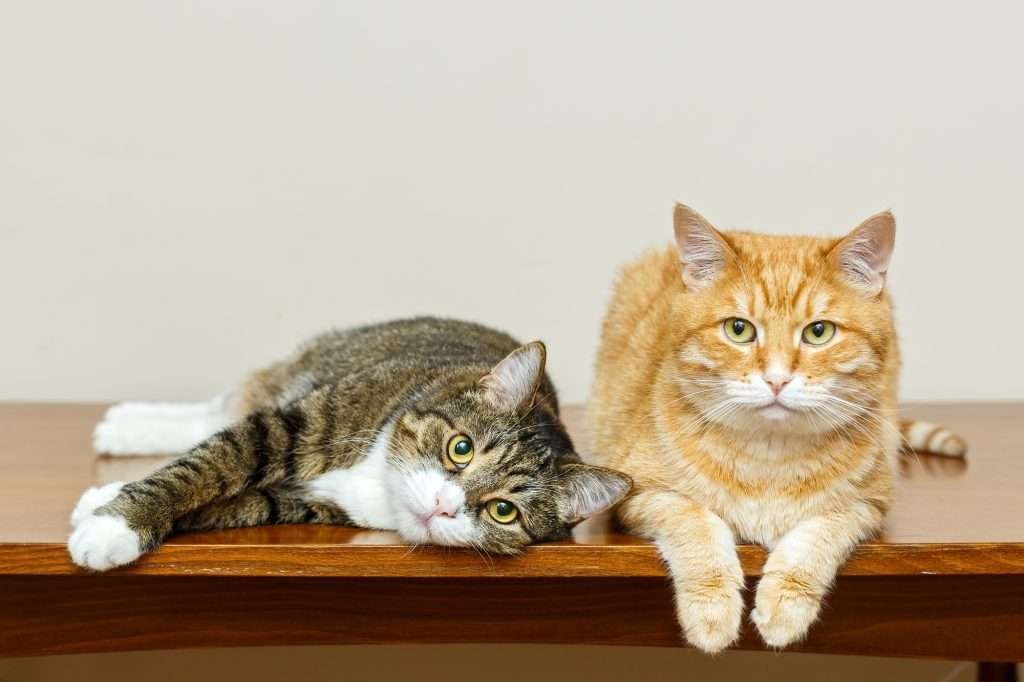
After all this, you might be wondering if you should get your solo cat a friend. And honestly? The answer is… it depends.
If you do decide to introduce a new cat to your household, take it slow. Like, really slow. No “here’s your new sibling, good luck” situations. Cat introductions should be supervised, and your home should have plenty of safe spaces, toys, puzzle feeders, scratching posts, and separate food and litter areas to prevent resource guarding and reduce conflict.
But here’s a comforting thought: cats don’t necessarily need other cat friends to be happy and healthy. Your cat’s most important relationship is the one they have with YOU. Making sure they get lots of your attention and plenty of playtime is probably enough for even the most social cats.
After all, they do have a reputation for being aloof and elusive to maintain. (Though between you and me, I think that’s just their cover. Last night I caught Isaac sleeping with his paw on my hand. Total softie.)
Do Cats Get Lonely?
It’s a fair question, especially if you work long days. Cats come from a mostly solitary wild ancestor and many are content on their own, so experts are careful about calling it loneliness the way we feel it.
But cats definitely care about their people. In one study, about two thirds of cats were securely attached to their owners, and many kittens meowed in protest when their person left the room for two minutes. In another, most cats preferred human attention over food or toys.
Signs your cat may be struggling while you’re gone include excessive meowing, pacing, hiding more, peeing outside the litter box, or new destructive scratching. These can also point to boredom, stress, or a medical problem, so check with your vet first.
What helps? A predictable routine, a few short play sessions a day, puzzle feeders, a window perch, and rotating toys. A second cat can be wonderful for the right cat, but cat friendships can’t be forced (more on that next).
Should I Get a Second Cat? A Quick Checklist
On the fence? The more boxes you can check, the better your odds of raising cat friends instead of reluctant roommates.
- Your cat already enjoys other cats. A cat who chases neighborhood cats away probably won’t welcome a housemate.
- Your cat is healthy. Cats coping with illness, pain, or stress tend to find a newcomer upsetting rather than fun.
- Ages and energy levels match. A bouncy kitten can wear out an older cat with achy joints, so two kittens together may work better.
- Everyone is spayed or neutered. Neutered cats are much more likely to get along.
- Bonus points for family. Related cats, like littermates, tend to be friendlier with each other.
- You have room for extras. Plan on one litter box, bowl, bed, scratcher, and perch per cat, plus one extra, spread around the house.
- You have patience for a slow introduction. It can take weeks to months, and how the first meeting goes shapes the long run.
Set your expectations, too. In one survey of shelter adopters, half of multi-cat homes saw fighting at first, yet over half of the cats accepted each other within a month and over 90 percent within a year.
My Own Experience
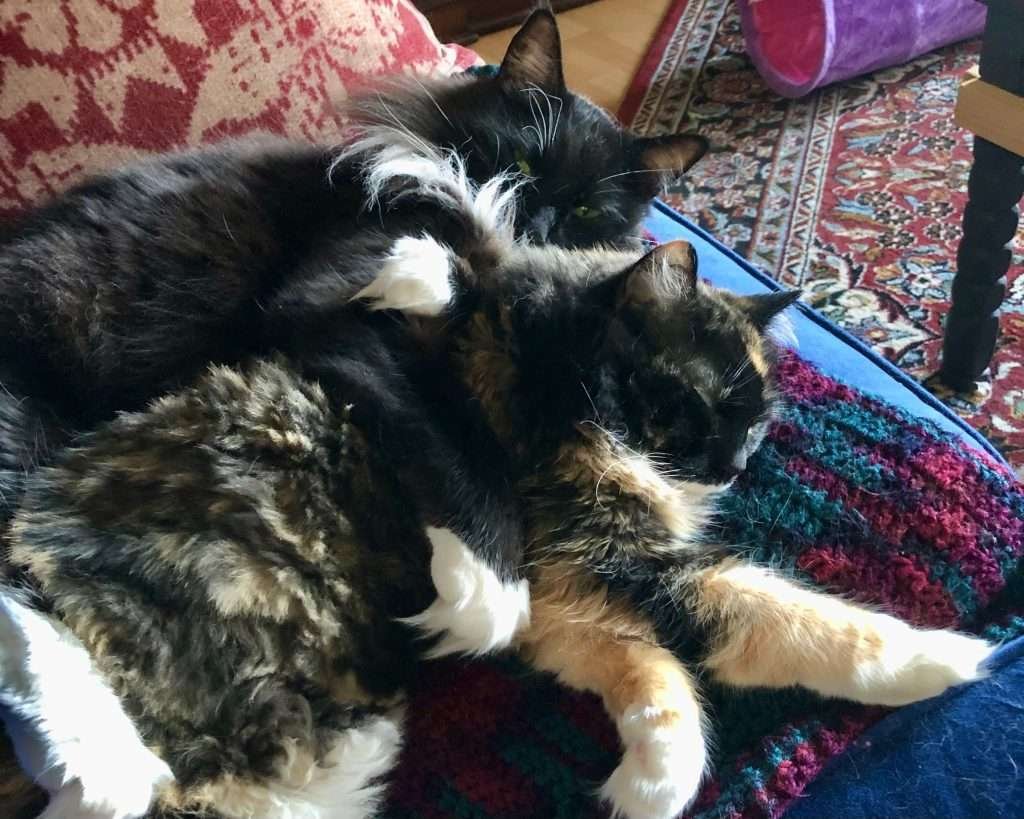
I’ve had multiple cats over the years, and their friendships have been all over the map. My cats Fia and Matisse weren’t littermates but remained inseparable most of their entire lives. They groomed each other, slept curled up together, and even seemed to take turns keeping watch while the other ate. It was the sweetest thing.
On the other hand, when I tried to introduce an older cat, Dex, to the mix, it was… challenging. There was a lot of hissing, some territorial scratching and fighting (RIP my favorite armchair), and months of tense standoffs. They eventually reached a state of peaceful coexistence, but they were never friends in the cuddling-and-grooming sense.
And then there’s my cat Isaac who formed an unlikely bond with my neighbor’s cat, Ming Ming. They would sit on opposite sides of the screen front door, just chillin’ together for hours and even reaching under to touch each other. When we sadly moved away, Isaac mourned no longer seeing his friend for weeks. If that’s not friendship, I don’t know what is.
The Truth About Cat Friendship
So what’s the verdict? Can cats have friends? Absolutely yes. But their friendships are complex, conditional, and not necessarily essential to their happiness. They’re a lot like introverted humans in that way, perfectly capable of forming deep bonds but also completely content with their own company and maybe just one or two close relationships.
The next time you see your cat staring out the window at neighborhood cats or snuggling up with your dog, remember there’s a complex social creature in there, navigating relationships in their own cat way. And while they might not be texting their besties or planning group brunches, they do form meaningful connections, especially with us, their chosen humans.
Cat Friends FAQ
Do cats have friends?
Yes! Many cats form close bonds with particular cats, which researchers call preferred associates, especially where food and space are plentiful. Friends groom each other, sleep curled up together, touch noses, and greet each other with tails up. Other cats simply prefer their own company, and that’s normal too.
Do cats need a companion to be happy?
Not necessarily. Many cats are perfectly happy as the only cat, as long as they get attention, play, and an interesting home. A companion can be great for a sociable cat, but a forced friendship can backfire, since constant tension can lead to stress problems like cystitis or overgrooming.
Is it better to adopt two kittens together?
Often, yes. Littermates and kittens raised together tend to be friendlier with each other than unrelated cats, and two kittens can burn off energy on each other instead of on an older resident cat. There’s no guarantee (cat relationships can be fragile), but siblings give you a head start.
Are two male cats better friends than a male and a female?
Maybe, but don’t choose by sex alone. A small study of neutered indoor pairs found male pairs spent the most time close together, and a large owner survey found two spayed females clashed more often. International Cat Care says the evidence for neutered cats is thin, though, so personality and a slow introduction matter more.
Can cat friends stop getting along?
Sadly, yes. A vet visit or hospital stay can upset the balance, and some cats treat a returning housemate like a stranger. Illness, stress, or a scary event can change things too. If your cat friends suddenly start fighting, have both checked by your vet, then reintroduce them slowly.
Sources
- Tepper, Dawson and Shnookal (2025), Do cats have friends? The Conversation
- Crowell-Davis and colleagues (2004), Social organization in the cat
- International Cat Care: Multi-cat households
- International Cat Care: Will my cat accept a new cat?
- Cats Protection: Is my cat lonely without another cat?
- Cats Protection: Getting another cat
- Oregon State University (2019), cats form attachments to caregivers
- Vitale Shreve and colleagues (2017), cat preferences study
- Khoddami and colleagues (2023), cat relationships in two-cat homes
- Maddie’s Fund: introducing cats
Join the Conversation!
What about your cats? Have you noticed any surprising friendships or rivalries between them and other animals? I’d love to hear your stories in the comments below!
P.S. As I’m writing this, Isaac has decided to sit on my keyboard, which I’m choosing to interpret as his editorial input rather than an attempt to sabotage my work. That’s what friends do, right? Support each other’s creative endeavors? Or maybe he just wants dinner. With cats, it’s always hard to tell.